
Scholarship applications ask a deceptively simple question: why the Bar? In reality, they ask something much harder: what has prepared you to serve it?
When I began my Middle Temple scholarship application, I expected to spend my time describing my CV. Applications, after all, invite candidates to list academic achievements, professional experience and future ambitions. I soon found myself wrestling with a different question: what had those experiences taught me about the profession I hoped to join?
The answer had accumulated quietly over several years.
Having grown up in Kenya, I arrived in the UK with a single suitcase and a place to read law at Durham University. Financial reality intervened. Unable to take up my university place because I was ineligible for student finance, I joined His Majesty’s Courts and Tribunals Service (HMCTS) instead. At the time, I regarded it as an unfortunate diversion. Looking back, it became my legal education.
In the following six years I worked in the Crown Court, the Court of Appeal (Criminal Division) and the High Court before moving to HMRC as a litigator. Alongside full-time work, I completed my law degree part-time.
Those years gave me something few aspiring barristers experience before practice. I saw the profession from inside the courtroom. For years, I watched other people’s careers unfold. Pupils made their first appearances, juniors became King’s Counsel and judges took their place on the Bench.
Like many people before entering the courts, I assumed the finest advocates would be the most eloquent.
Three weeks in the Crown Courts corrected that assumption.
The advocates who earned a judge’s confidence shared remarkably similar habits. They arrived exceptionally well prepared, identified the real issue quickly and resisted the temptation to pursue every argument available to them. They answered the question that had actually been asked and knew which questions deserved emphasis.
Courtrooms have a remarkable ability to expose unnecessary words.
One of the greatest privileges of my career was working alongside a judge whose understanding of public service extended far beyond the courtroom. I had expected to learn from the cases before the court. Instead, I found myself learning just as much from everything that happened around them. Improving the experience of vulnerable witnesses received the same careful attention as difficult legal arguments. Relationships with practitioners were cultivated thoughtfully. The decision to open the doors of the Crown Court to more than 5,000 members of the public was approached with the same seriousness as any case listed before it. Watching that approach taught me that confidence in justice is built long before a judgment or sentence. It grows through openness, patience and a genuine belief that the courts belong to the public they serve. That lesson has remained with me far longer than any individual case.
One of the most valuable lessons the courts taught me was that justice is measured by the quality of the process that produces it. Outside the profession, success is often understood in binary terms: someone wins and someone loses. Working within the courts revealed something more subtle. Good advocacy is not an endless game of ping-pong, where each side simply returns the next point with increasing force until the exchange loses all purpose. The advocate’s role is to help the court identify the real issue. The judge can then aim for the bullseye, and the barrister’s job is to provide the assistance necessary to reach it.
Watching judges and advocates was only part of the education. Working within HMCTS also showed me how much of the administration of justice depends upon people the public rarely notice. Ushers, associates, clerks, listing officers and administrative staff each contribute to the fairness of proceedings in ways that often go unseen. Their work generally attracts attention only when a printer fails or the wrong defendant appears on the screen.
Across each court, the same lessons returned in different forms; advocacy is a service: to the court, the client, and to justice itself.
Someone I admire once remarked that many people want to reach the Bar. They obtain the grades, complete mini-pupillages and pursue it through hard work and determination. Others feel they have to reach it. For them the Bar is more than a career ambition; it is the profession they cannot help but pursue.
By the time I sat down to write my scholarship application, the answer was clearer. I realised the years I spent serving the justice system have taught me that the Bar itself is, at its heart, a profession of service. Once I understood that, I could no longer imagine doing anything else.
The Middle Temple scholarship has removed the financial barrier that had once prevented me from even starting a law degree. It made the Bar Course possible and reflected confidence from members of the profession whose judgment I deeply respect.
As I prepare for the next stage of my professional journey, I remain enormously grateful to Middle Temple, not only for making that journey possible, but for reminding me why I began it in the first place.
There is no single route to the Bar, nor should there be. The profession benefits from people who arrive by different paths.

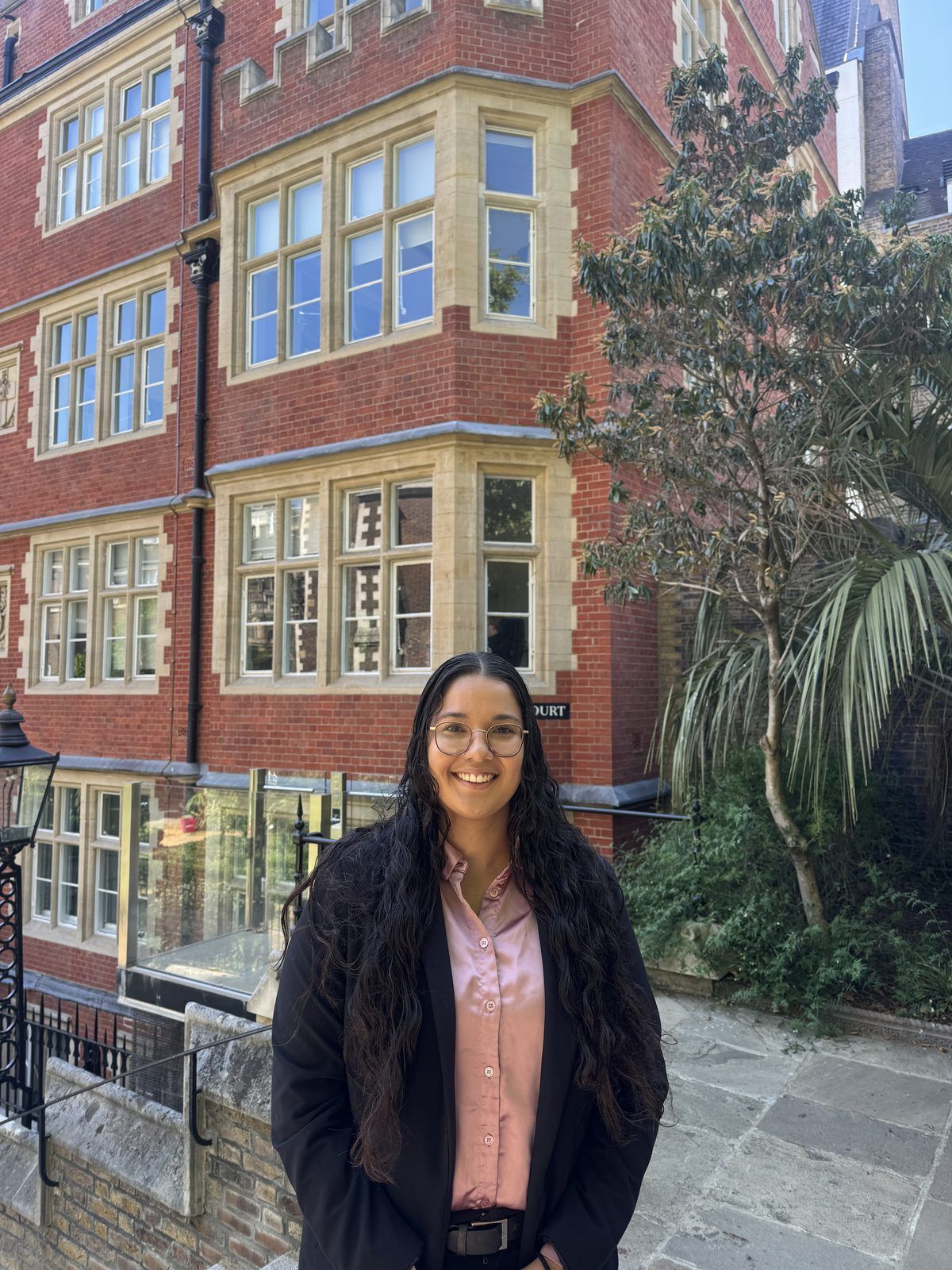
Jordana Allen-Rowlandson
Jordana Allen-Rowlandson is the recipient of the Robert Garraway Rice Scholarship at Middle Temple. She has spent six years working within His Majesty’s Courts and Tribunals Service across the Crown Court, the Court of Appeal (Criminal Division) and the High Court before joining HMRC as a litigator. She completed her law degree part-time while working full-time and volunteers as a Family Court Magistrate. She will commence the Bar Course this year and hopes to practise at the self-employed Bar.