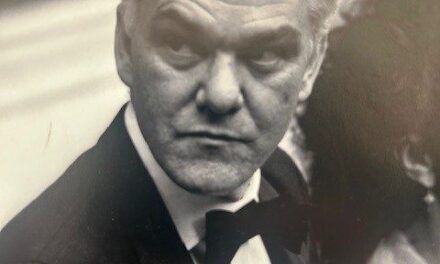
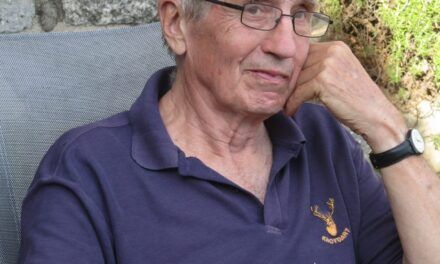
A racially motivated killing must be one of the gravest kinds of killing, Sir Edwin Jowitt told the defendants before him. He added: ‘You put your heads together with the purpose of arming yourselves and of attacking an innocent man you might find by chance simply because he was of a different race to yourselves.’
Jowitt, sitting as a High Court judge, was presiding over a trial involving the gang murder of Ross Parker, a white teenager killed in 2001 by a group of men of Pakistani origin in Peterborough. The attack on Parker, while out walking with his girlfriend, came amid tensions after the September 11 attacks in New York and Jowitt imposed hefty sentences: he condemned the brutal nature of the crime, describing it as ‘cowardly and senseless’ and driven by racial hatred, rejecting arguments that the murder was not racially motivated. He jailed the ringleaders for life with minimum terms of 15 to 18 years.
His firm handling of the trial in 2002 drew praise for its clear focus on evidence. He was two years into his retirement but still occasionally sitting on the High Court Bench and the sensitivity of the case made Jowitt, previously a Circuit Judge and Recorder of Birmingham, an obvious choice. Sir John Goldring, a retired Court of Appeal judge who knew Jowitt in chambers, said: ‘He was meticulous, precise, a very, very good criminal judge — he could get any heavy criminal case and he would be excellent.’
It was not the only time his judicial skills were sought after. In 2004 Jowitt was one of three judges chosen to lead inquiries into three controversial killings in Northern Ireland. In his case it was the investigation into the murder of Robert Hamill, a 19-year-old Catholic kicked to death by loyalists in Portadown, Co Armagh, in April 1997. He chaired a panel that held extensive public hearings, listening to testimony from more than 130 witnesses.
He faced some criticism and legal challenges from former Royal Ulster Constabulary (RUC) officers for his decision to refuse them anonymity and force them to testify without their faces being screened. His decision was upheld by the House of Lords.
Jowitt’s final report, completed in February 2011, spanned five volumes and cost £33 million. The inquiry was said to have found no evidence of deliberate collusion between RUC officers and the loyalist perpetrators of the attack but highlighted multiple systemic failures that allowed the killing to occur unchecked and undermined prosecutions of suspects. Legal proceedings delayed publication of the final report, which is now scheduled for after this year’s summer parliamentary recess.
Edwin Frank Jowitt was born one of three boys in Ripley, Derbyshire, in 1929. His father, Frank, was an engineer and his mother, Winifred (née Hunt), was a businesswoman. He went to Swanwick Hall Grammar School, then read law at the London School of Economics, gaining an LLB. When he was 14 one of his mother’s friends said he had a tongue like a barrister; that, his mother thought, was the start of his legal ambitions. He was Called to the Bar by Middle Temple in 1951.
In 1959 he married Anne Barbara Dyson, a nurse. She died in 2008. They lived in Desborough, Northamptonshire, where they brought up their five children, two of whom went into law: Rachel, a therapeutic counsellor; Simon, an artist and teacher; Emma, a nurse; Matthew, who is Attorney General for Jersey; and Justin, a City solicitor.
A lifelong and devout Roman Catholic, Jowitt’s faith was central to his personal and public life. Lord Hacking, a former pupil, was travelling with him when news came of the assassination of President Kennedy. Jowitt stopped the car, Hacking recalled, and went into a nearby church to pray.
He also had a sense of humour: he enjoyed a practical joke and would entertain the family with a party piece. It involved one of them holding his hand with the door almost closed so he could not be seen. He would be wearing a waistcoat and jacket and would contrive to reappear, with the waistcoat over the jacket. Mountain walking was a great passion, as was cycling: when less stable later in life, he took to a tricycle.
At the Bar he shone as a cross-examiner, joining chambers at 2 Crown Office Row (colleagues included Geoffrey Lane and Igor Judge, both later to become Lord Chief Justice). Hacking recalls: ‘He was a superb advocate and a careful but brilliant cross-examiner. It was surprising later to learn that he had to conquer his nerves before going into court. He described being physically ill.’
Jowitt developed a successful criminal practice mainly on the Midland Circuit, taking silk in 1969, becoming a Crown Court Recorder in 1972, a Circuit Judge in 1980 until 1987 then the Senior Circuit Judge and Recorder of Birmingham from 1987 to 1988.
As a judge he was regarded as firm and fair, tending towards old-school strictness rather than what became the modern, more friendly approach. He did not suffer fools and expected counsel to be fully prepared. ‘He was very much in command of his court,’ Goldring recounts. ‘He didn’t let counsel get away with anything loose.’ His widely respected ability as a Senior Circuit Judge led to promotion to the High Court Bench in 1988, where he stayed until 2000. The move was a surprise to him, if not others; he would modestly say he never thought it would happen.
In 1991 he presided over the trial of Frank Beck, accused of systematic child abuse at Leicestershire children’s homes. He controversially did not allow the naming of prominent individuals allegedly involved, stating: ‘Are names relevant? Allegations are made, not necessarily by the people who know, and repeated second-hand, against people who are not here to defend themselves.’ Beck was convicted of multiple charges and sentenced to five life terms.
Jowitt also handled the trial in 2001 in which Afghans fleeing the Taliban were convicted of the Stansted hijacking the year before. His rejection of the men’s defence of duress because of Taliban threats, and his assessment that there was ‘overwhelming’ evidence for guilt, were overturned on appeal — prompting allegations of judicial leniency against the more senior court.
He did not have legal connections, nor had he been to a well-known school or to Oxbridge. Jowitt nonetheless reached on merit the upper ranks of the profession. In a powerful testament to the core principle of judicial independence, he told the Hamill inquiry: ‘We embark upon our task without any preconception as to where the truth lies. We are anxious to do all we reasonably can to discover that. The evidence placed before us may vary in its quality, but we are sure that it is only by considering and weighing all the evidence which has relevance to our terms of reference that we can properly perform our task of seeking after the truth.’
He added: ‘We are independent of government or any other body or person… The decisions and recommendations… will be ours and ours alone. Nor shall we allow ourselves to be led or improperly influenced by others, whoever they may be.’
Obituary reproduced with kind permission from The Times.