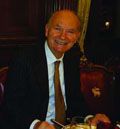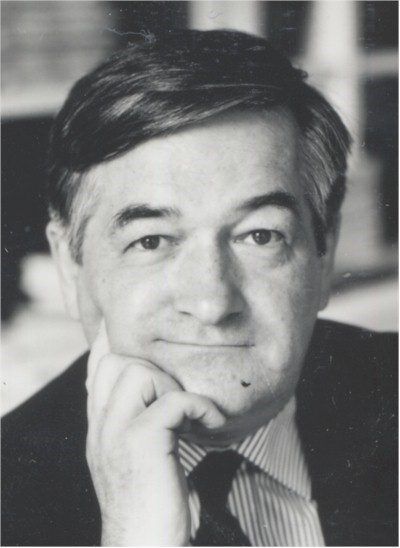
The news that Master James Munby had died suddenly at home on New Year’s Day 2026 came as a great shock to his many friends and former colleagues in the law. He was one of the outstanding lawyers of his generation and a judge who left an indelible mark on the family justice system.
Born in 1948, James was educated at Magdalen College School, Oxford. He read law at Wadham College, Oxford, where he was an Eldon Scholar. He was Called to the Bar by Middle Temple in 1971 and started his pupillage later that year on the very day the Family Division came into existence after the abolition of the old Probate, Divorce and Admiralty Division. He was in Chancery Chambers, but his pupil master was John Waite (later a judge of the Family Division and the Court of Appeal) whose practice extended to wardship (which up to that point had for historical reasons been allocated to the Chancery Division). Perhaps for that reason, as his own practice grew rapidly across the entire range of the Chancery jurisdiction and beyond, James continued to be instructed in cases involving children and incapacitated adults.
His first major contribution to this area of the law after taking silk in 1988 was appearing for the Official Solicitor in Re F (Mental Patient: Sterilisation) [1990] 2 AC 1, in which the High Court remedy of declarations as to the best interests of mentally incapacitated adults was first recognised. At the moment of his appointment to the High Court Bench, the range of his practice and expertise was such that he could have taken a post in any of the three divisions. He chose the Family Division, and for the next 18 years his contribution to the work of that division, and the modern Court of Protection which came into existence in 2007, was unrivalled – initially as a puisne judge, then in the Court of Appeal, Chair of the Law Commission and finally, in 2013, President of the Family Division. In that capacity, he oversaw radical reforms including the introduction of the new family court, the new financial remedies court, and a successful drive to reduce delays through more efficient case management (heralded by his mantra ‘it can be done, it must be done, it will be done’).
The key quality which enriches his many judgments in the family and mental capacity field is his humanity, manifested in a deep empathy towards the vulnerable individuals whose welfare and best interests he was required to determine. He was not infrequently sharply critical of authorities and institutions who failed to meet the needs of those individuals they were supposed to serve. On one occasion, a judgment in which he excoriated the authorities for their failure to find suitable secure accommodation for a vulnerable teenager was described as reminiscent of Dickens.
Coupled with this was his extraordinary legal erudition, which on many occasions extended way beyond the narrow confines of the quotidian issues arising in the case and included excursions into long-forgotten areas of legal history. On occasions (like the present author), he was criticised for the length of his judgments. He was much teased for his habit of alluding in a judgment to a legal principle by saying something like, ‘it is unnecessary to refer to the authorities in any detail – they are well known’, and then reeling off a list of cases far longer than the rest of us had ever heard of. The only mystery is how and when he wrote his judgments. No one saw him struggling over a keyboard and he was allegedly no more than a two-finger typist. Another feature of his judgments which has perhaps not received the recognition it deserves is the style in which they are written. His prose is magisterial but also ironic, entertaining and filled with the warmth of his humanity, qualities which made him the most engaging of colleagues and companions.
James had a lifelong love of trains, apparent from an early age when he established a railway club at school. He never drove a car, hated flying and throughout his life would take every opportunity to travel by rail. One of his proudest achievements as Chair of the Law Commission was a report on level crossings. On one occasion, as President of the Family Division, he agreed to attend an Anglo-Irish family justice conference in Dublin. He resolutely refused to fly, saying he would get there under his own steam and without a passport (which he had mislaid). Until the last minute, his whereabouts were a mystery, causing some alarm to my colleague, Peter Jackson, who was organising the event. But when we arrived at the hotel, we found him in the bar, having travelled by train to Holyhead and then by boat to Ireland.
James was a devoted family man, who in retirement spent most of his time at home in Wiltshire with his wife, Jenny, and their children and grandchildren. He continued to write about his many interests, including notorious historical family cases from the Victorian era. He championed the use of data and research material in family justice and was strongly supportive of the Family Justice Observatory, of which he served as Chair of Trustees for several years. Above all, he worked hard in support of the move towards greater transparency in family justice, which he had long championed. His campaign extended back at least as far as his trenchant judgment in Clibbery v Allan [2001] 2 FLR 819 which, though overturned by the Court of Appeal, anticipated many of the reforms which have subsequently come to pass. In retirement, James continued to write passionately about this subject, alongside his great friend Nicholas Mostyn.
Some judges, though larger than life during their careers, leave no lasting trace. Others continue to influence the justice system for decades. James Munby undoubtedly falls into the latter category. We will continue to feel the benefit of his reforming zeal, and his legal brilliance, for many years.
Tribute kindly written by Master Jonathan Baker.