Life is busy as a Middle Templar on the Midland Circuit. Some things remain constant, including the dynamic leadership of the Middle Temple Midland Circuit Society from Master Blondel Thompson as others move on. In particular, the Society has said goodbye with thanks for their service to Patrick Limb KC, Master David Mason and Earl Pinnock, and welcomed new blood in the form of Jennifer Josephs KC. We are grateful for the continued support of the Inn’s officers, in particular Oliver Muncey and Antonia Reeves.
The society has been busy, with the usual animated quarterly meetings characterised by conceiving, planning and arranging social events, event programmes, regular updating of the ledgers and regular consideration of what more the Inn can be doing to help members here in the Midlands. Of equal importance is the committee’s discussions as to what more can be done to engage Middle Templars on Circuit in the life of the Inn and the many opportunities and facilities it affords. The Inn and the committee ensure that periodic reminders regarding the benefits of Inn membership, including access to Inn facilities when in London, are circulated.
A number of City Social events were held throughout the course of the year across Circuit, with the 2025 programme culminating with the annual Circuit dinner at the Malmaison in Birmingham on Thursday, 25 September. A lively evening saw practitioners mingle warmly, the Inn was toasted and much fun was had.
A reflection on a Grand Old Lady
As well as bringing you news from the Midlands, I take this opportunity to reflect on one of the landmarks of the Midlands legal landscape over the last 60 years – Fountain Court (not that one, the Birmingham one). The Midland Circuit has a broad span and houses many centres of excellence in advocacy and advisory work across the East and West Midlands. Fountain Court was, in its heyday, the largest such centre on Circuit and a powerhouse for the Bar and the Bench in the West Midlands since its construction in 1964.
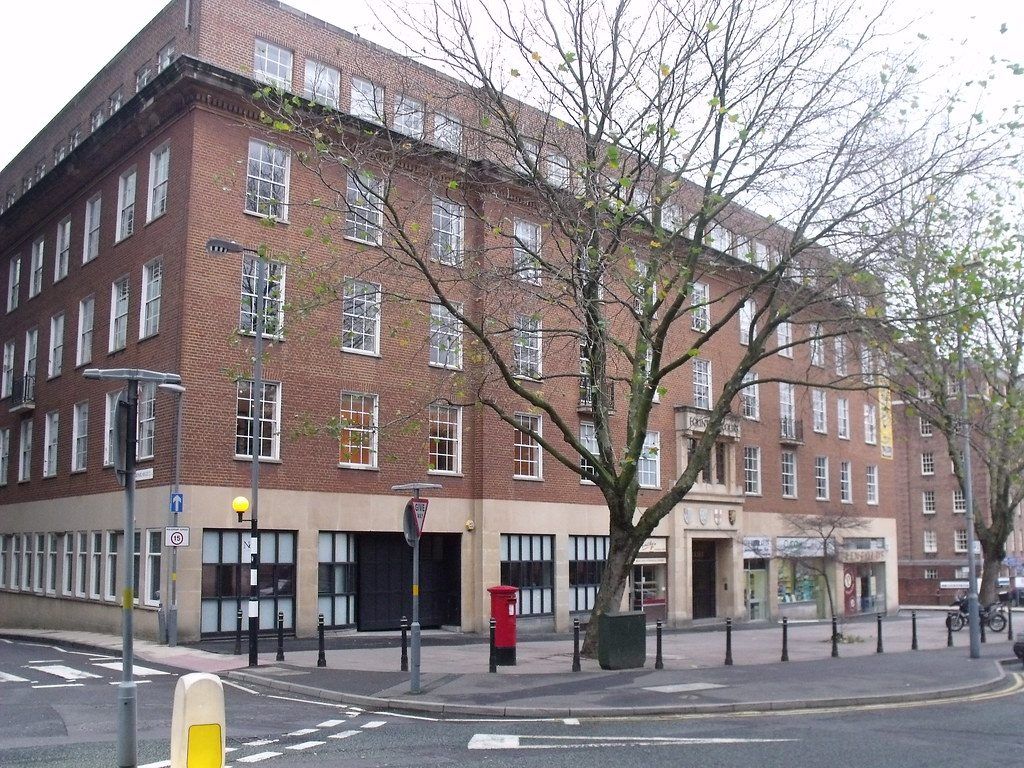
When No.5 and No.8 clanked the gate shut behind them for the last time in 2024, an era ended. Members may well have seen, by way of a national advertising campaign in the broadsheets, that Fountain Court is now being marketed for the sale of converted luxury flats. It was seeing one such advert that caused me to reflect on my own time at Fountain Court and to think to its history.
I arrived in Birmingham in the summer of 2000 to undertake a third VI pupillage in the old No.3 Fountain Court, a predominantly criminal set with an unmatched record for members taking silk and/or judicial appointment. Fountain Court seemed to me to be a piece of the Temple, dissected and lifted out and dropped into the otherwise aesthetically challenged city centre of Birmingham. A quadrangle of busy buzzing barrister life, tempered by the gentle lapping of the fountain in the courtyard.
I am grateful to HH Murray Creed, Midland Circuit Remembrancer, for his assistance in tracing the history that follows. In April 2025, Murray curated a quite wonderful exhibition at St. Philips Chambers from the Midland and Oxford Circuits with documents, tales and artefacts dating back to 1773. Many of those documents relate to the financing, construction, population and de-population of Fountain Court over the decades, sourced from a number of Circuiteers.
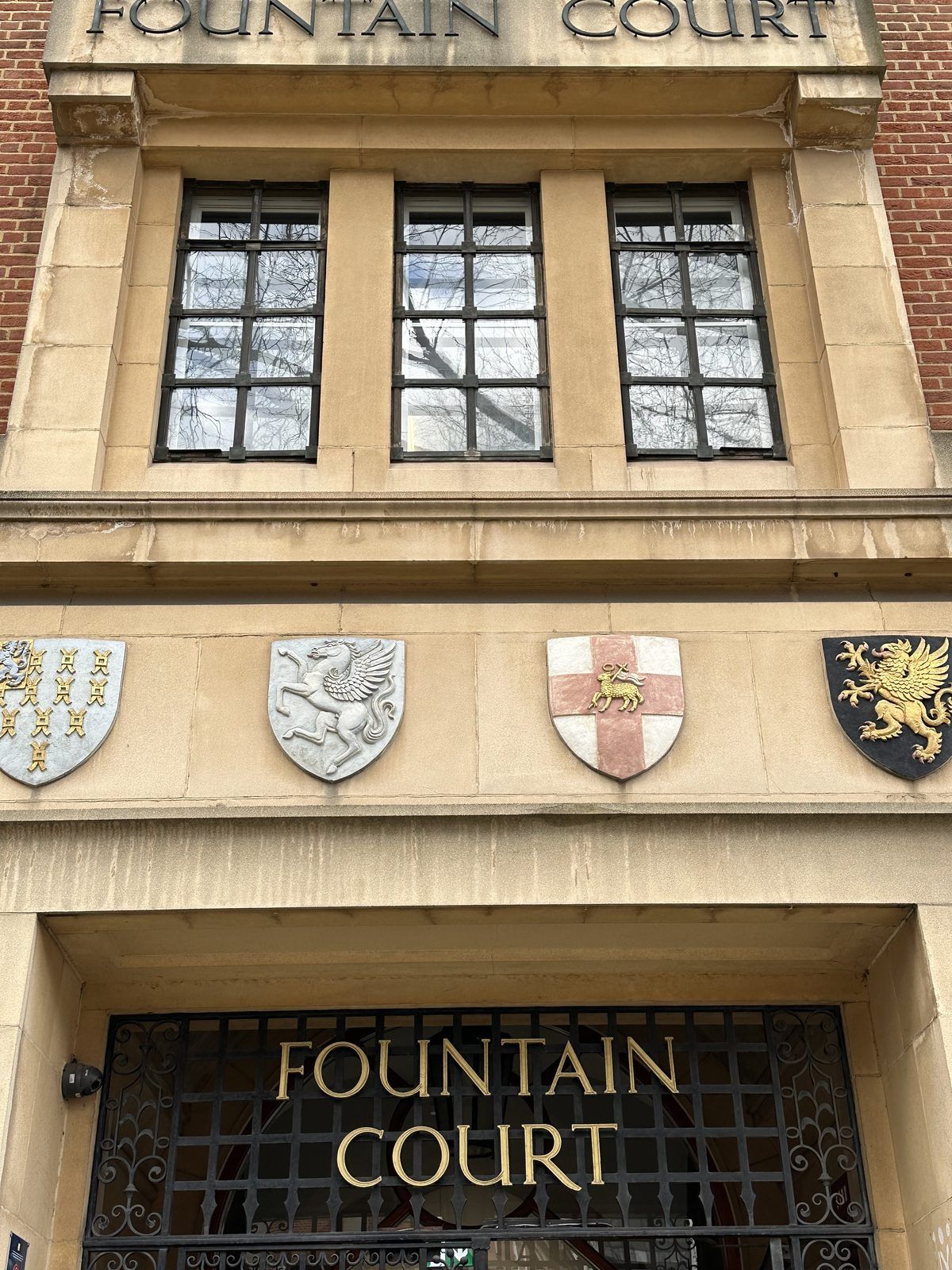
Prior to 1964, the city’s sets were spread disparately around the city centre, from Temple Row to Waterloo Street and Bennett’s Hill. Operating on this occasion without financial assistance from the Inns (whose crests nevertheless still sit atop the iron gates to the building) the largest sets decided to move to a purpose-built new home situated to the rear of the Victoria Law Courts and Steelhouse Lane police station. They drew lots and numbered themselves 1-6 Fountain Court and together formed the Fountain Court Company, with a share each and a notional value of £100. The Fountain Court Company took a 99-year lease and the sets moved into their new home.
For the next sixty years, Fountain Court would house some of the brightest legal minds in the country, producing countless judges at all levels and providing a happy home to a thriving profession. Over the years further sets emerged, merged and demerged. Nos. 7 and 8 arrived, as did St. Ives. Solicitor firms such as Blair Allison and Carney Smith came and went.
In 2001, following the 1998 merger of No.2 and No.7 to birth St. Philips Chambers, these barristers left for a new home in the old Bank of England building on the Cathedral square. There they were later joined by No.1 and a portion of No.3. Over the years more and more of Fountain Court came to be occupied by No.5, and the Chambers parties – spilling out of the reception area and into the courtyard and lasting long into the evening – became a thing of legend.
In the latter years, only No.5 and No.8 remained. Although a beautiful building and a place full of fond memories, the old lady had begun to creak. Building maintenance issues accumulated, parts of the building stood unoccupied, and the remaining sets began to look to the future. When No.5 moved to its new home in a skyscraper at the other end of Colmore Row in 2024, so ended the Birmingham Bar’s love affair with Fountain Court.
The building has been closed for refurbishment since but will forever hold a place in the hearts of those who practised from it, and perhaps those of you who visited it over the years from London and the other Circuits for social and professional engagements. For my part, I hope the redevelopment is a success and that Fountain Court once again becomes a thriving part of Birmingham’s city life.
Enough reminiscence – on to the future! We wish you all well from across the Circuit.
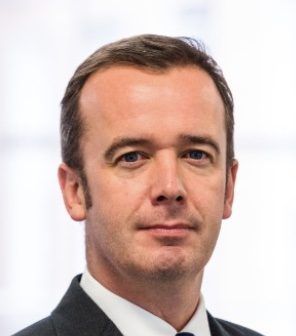
John Coughlan KC practises in clinical negligence and catastrophic injury cases from No.5 Barristers’ Chambers, Birmingham. He was Called to the Bar in 1999 and took silk in 2021. He is Head of the Clinical Negligence Group at No.5, Deputy Head of Chambers and Deputy Leader of the Midland Circuit. He serves on the Middle Temple Midland Circuit Society as Vice Chair.