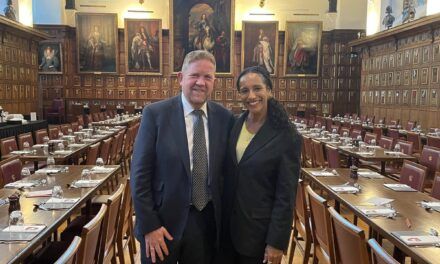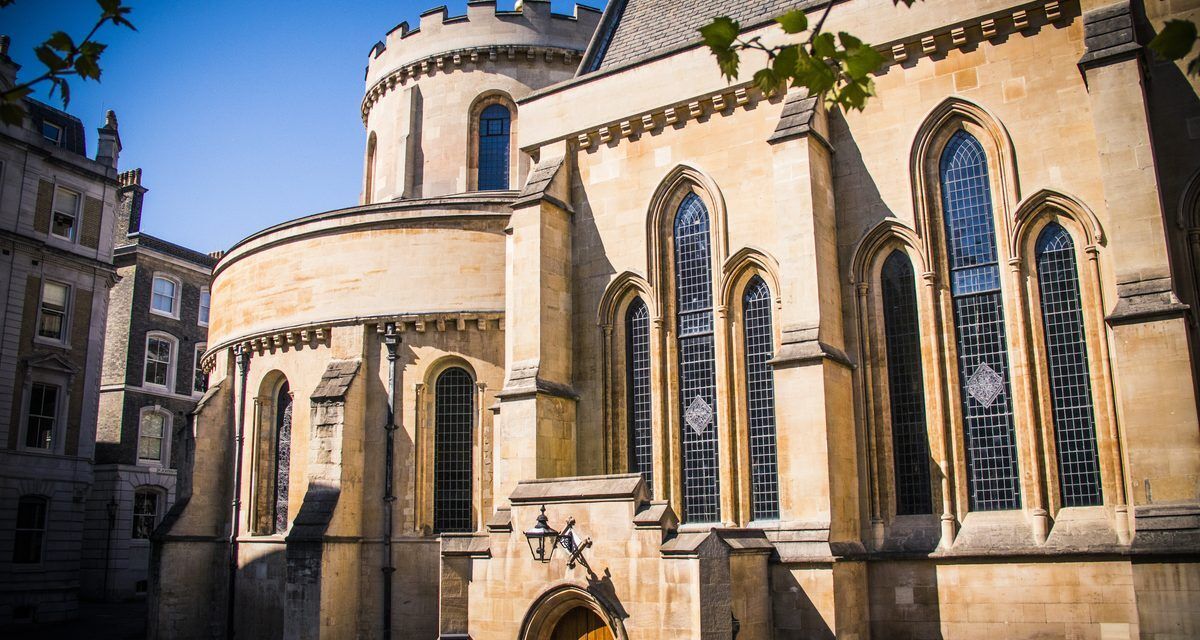
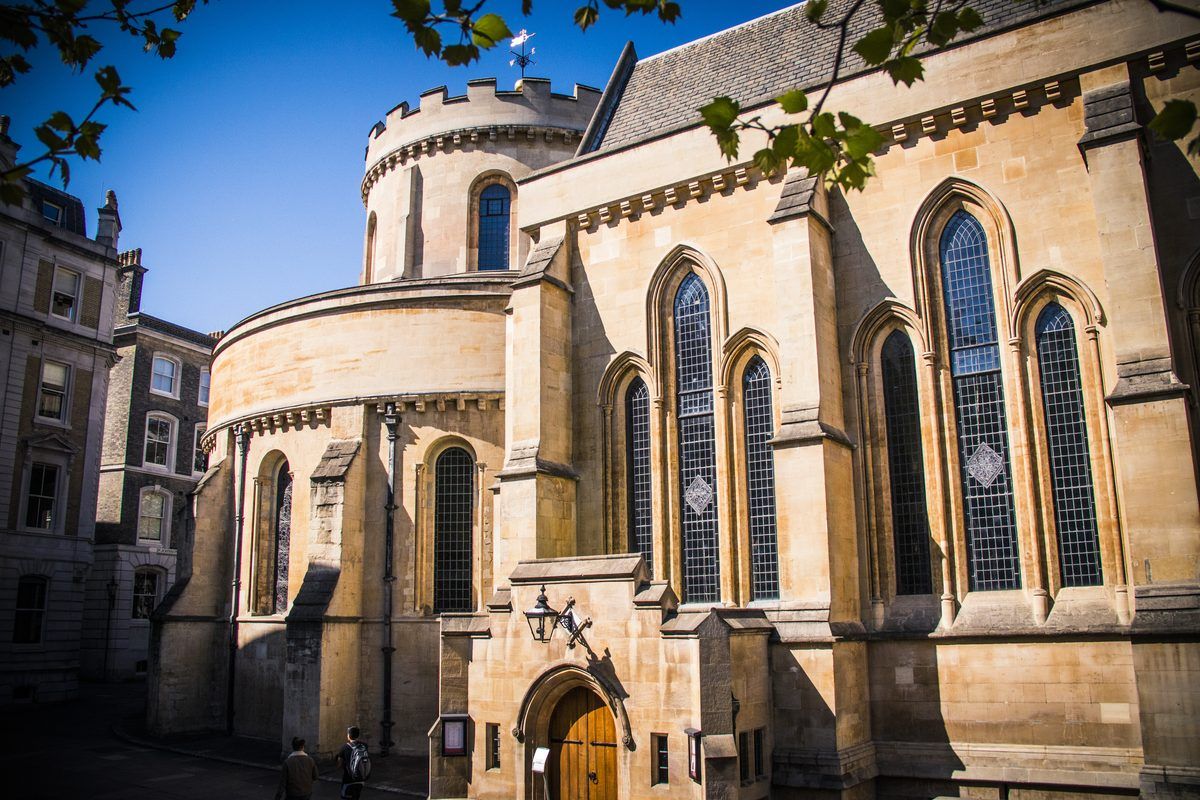
Temple Church’s Director of Music, Thomas Allery, speaks to Yvette Murphy, the newly appointed Head of Choral Education and Outreach, about her role and new directions for the church’s flourishing music programme.
Congratulations on your first year working with us, Yvette. To start with, could you tell our readers about what your role at Temple Church involves, day to day?
The choristers in the choir (aged 7–13) come to us four evenings per week for rehearsals and services, and my role is primarily to work with our youngest recruits, the probationers, primarily teaching them all of the key skills they need to develop as they progress towards becoming full choristers. We work with them on a variety of skills, from learning some of the key repertoire, learning healthy singing techniques, and also musical theory and reading music. Then, more broadly, in terms of the education and outreach work, I plan and lead a variety of activities over the course of the year working with partner schools and other organisations.
This year, for instance, we put on a singing project with several local schools, culminating in a mass performance at the Temple Church. We’ve also led organ workshops, where schools have come to us to experience our wonderful instrument and learn more about the organ and how it works.
What do you think is the importance of broadening our work here with these sorts of educational and outreach activities?
Music education in the schools has never been so at risk and so fragile, so it’s incredibly important that all institutions share their resources widely. Compared to 50 years ago, the natural place of singing and learning music is almost absent, and where there is that provision, it tends to be extremely unevenly spread across the sector. So, in terms of music, I really believe that the best way to get somebody involved is to meet them where they are. To that end, it’s wonderful to be able to bring children here on trips: it is incredibly inspiring for them to be in a building where music has been part of the story for centuries. The way to get people to come here for the first time is to go and meet them in their context in schools first.
In coming here, their musical horizons are expanded, and for those who really take to it, there is obviously the opportunity to audition for choristership as well. It’s great for me to have been building on the work you have done in the past five years, Tom, and there’s a real sense of opening doors to any level of participation.
What were you doing before this?
My previous role was for the Catholic Diocese of Westminster, where I was the director of their school singing programme. There I worked with a team across 25 primary schools every week, setting up school choirs and leading school singing in the classroom. Musically that was slightly different to the repertoire we are typically doing here at Temple, as the music was largely liturgical with group hymn singing as the core.
What do you think the highlight of your first year here has been?
Our performance of Captain and his Floating Zoo project was a real triumph, with six schools coming here over the course of two days and singing together for the first time. The things they had learned in school really come to fruition here and to see them so inspired by the building was incredibly rewarding. I’ve also really enjoyed working with the Temple Youth Choir. They are a wonderful group, aged 13 right up to those in their early twenties who are looking for ambitious singing opportunities. It is great that the music programme at Temple now works across the sector and age range, identifying the gaps where young musicians need opportunities and support.
What is the most surprising thing you have found about working here?
I found that I was very nervous for my first Mattins service! I hadn’t done Choral Mattins before arriving at Temple, and I’ve really grown to love it as a service as it has opened my eyes to a whole range of repertoire. We are surrounded here by people with interesting and demanding careers, and I have found the church to be a place that everyone feels at one. When they come into the church, a place of such unique beauty and peace, there is a real sense of connection, shared hope, and mutual care for this special place within our communities.
How do you think the Temple Church and partners across the industry can make sure that this tradition is safeguarded for the future, balancing both tradition and new directions?
Historically, choral singing is a tradition that has been reserved for quite a small number of people, often drawing from certain schools and, of course, for centuries, it was for boys only. Again, Temple is unique here in our vision for the music programme. I think that the key to the future is breadth of access: the Temple City Singers, our new junior choir, has been really beneficial in being able to expand the access to high-quality teaching to more children so, even for those who are not choristers, there are still opportunities to access the tradition in a way that suits their schedules.
How have you found running this new choir, which we set up in January?
They have been wonderful! It is a lively and energetic group from across London meeting on Tuesday evenings. They are currently busy preparing for a concert where they will join with our choristers and a partnership school for a concert of Britten and Tippett.
What do you think makes the church unique musically?
What I find unique and inspiring here is that people are drawn from such different backgrounds. The choristers all attend different schools: we do not have a cathedral school, and so they come with their own stories and different experiences of music which come together here.
The same goes for our fantastic professional singers in the back row of course, who come from a range of professional musical careers, and I love the different influences they bring here to a common goal.
What are your priorities and aims when teaching children singing and music?
Singing is so important because it is a physical, embodied process. Life is so busy and pressured now, so being able to do something which physically connects to who you are as a person with musical expression has never been more valuable, relevant and precious.
It is important for children to develop their healthy relationship with their creative and emotional sides early on, and that’s something I enjoy about everything we do at Temple; trying to create young expressive and well-rounded musicians from the outset.
What are your ambitions for the future here?
Looking further down the line, it is really about building what we’re already doing and working with more partner organisations as we build our network and relevance in the sector. I guess my greatest fear is that there are children out there for whom choristership would be completely life-changing and the perfect opportunity for them to grow, but they might not know about us. So, I think my mission is that every child in London who could be a good fit for this musical education at least knows about that opportunity.
Well, thank you for doing all the work you’re doing here! Temple Church became an independent charity in 2023 and the work you are leading on the educational side is a key part of the mission of the charity.
Absolutely, it’s so important. Something that I have enjoyed this year is working with our organist, Charlie Andrews, to make our organ recital series align with those aims, and giving opportunities to those for whom it will be of the greatest benefit. Building on the work you have done already, Tom, with organ teaching and student organ opportunities, we have some sixth form pupils coming this year to give performances in the series alongside the professionals this year. It will be an incredibly inspiring thing for them to be able to come and play here, and to have this dimension within every part of what we are doing is key.
It has been great for our congregation and visitors to see you in action conducting for some of our Wednesday evening services too. What’s been your favourite piece of music that you’ve conducted?
I have enjoyed bringing my own musical interests here, picking music for services that I’ve been able to conduct. I particularly liked introducing our professional ensemble, the Temple Singers, to some music by Cecilia McDowall whose music I particularly admire. It has been such a privilege to work with them and all the musicians at Temple Church.
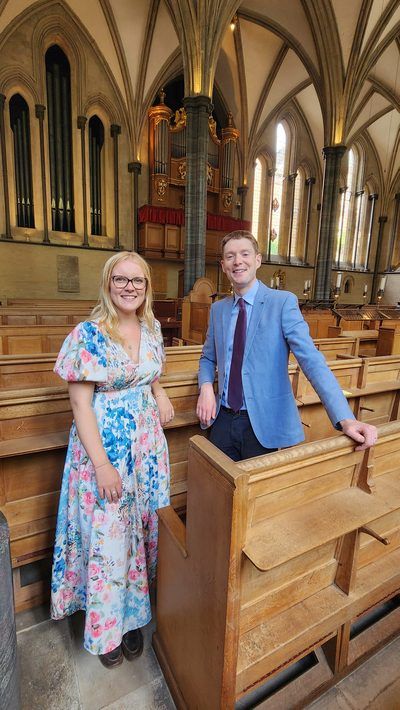
Thomas Allery is the Director of Music at Temple Church, overseeing a year-long choral programme. Also active as a harpsichordist with a range of ensembles, he is a founding member of Ensemble Hesperi and a professor of Basso Continuo at the Royal College of Music.
Yvette Murphy is Head of Outreach and Choral Education at Temple Church. She is also Organist and Director of Music at St Saviour’s, Pimlico, and Courses Manager for Creative Oundle for Organists. Yvette studied Theology at the University of Cambridge and held an organ scholarship at Selwyn College.