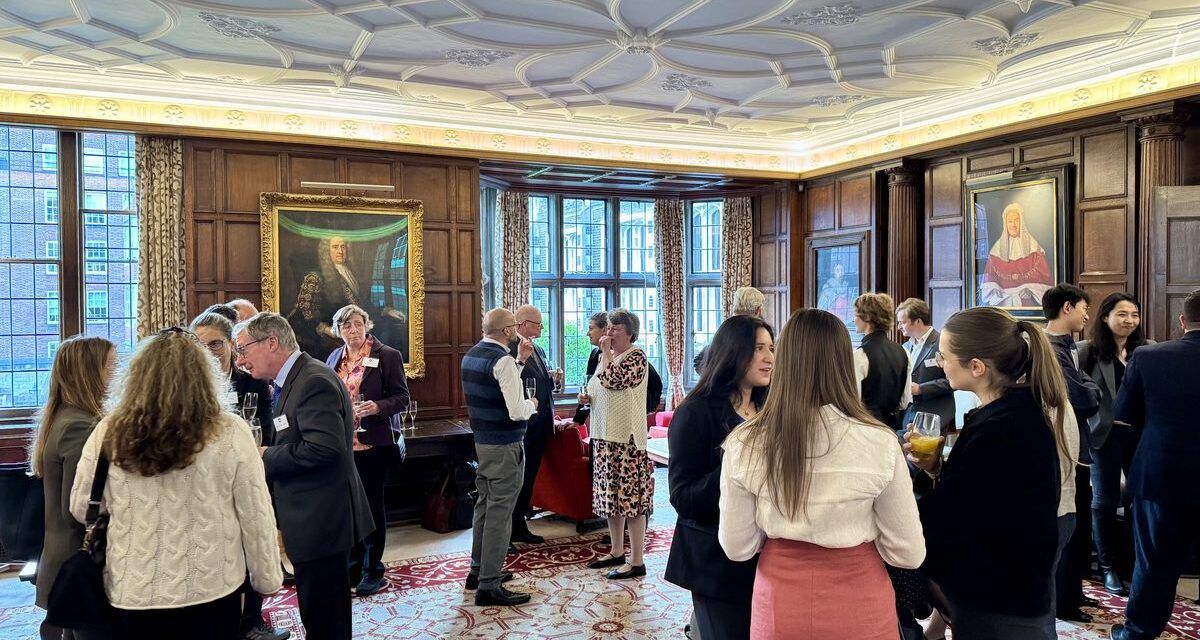
Approximately one fifth of the practising Bar is now employed; operating within government, regulators, financial institutions, commerce, law firms and the wider public sector. The employed Bar has become an established and indispensable part of modern legal practice, reflecting the increasing diversity of the profession and the evolving ways in which barristers contribute to public and commercial life.
The Middle Temple Employed Bar Society (MTEBS) exists to represent, connect and support barristers and members of the Inn who are practising as barristers in employed roles, whether in the public or private sector and those members of the Inn contemplating becoming an employed barrister. If that sounds like you, this is your society, and you are warmly invited to join.
Despite forming a substantial part of the profession, employed practitioners have not always been especially visible within Inn life. Those, like me, who joined the employed Bar some twenty or more years ago will recall a time when employed practice was far less familiar within the Inns, and career paths outside traditional chambers practice (and perhaps the Crown Prosecution Service) were less widely understood. The profession has since evolved significantly, with employed barristers now firmly embedded across all sectors of legal practice.
MTEBS seeks to reflect and support this development. Our focus is built around four core aims: relevance, recognition, representation and reputation. We work to ensure that the Inn’s training, events and opportunities reflect the realities of employed practice, while also championing the distinct contribution employed barristers make to the profession as a whole.
For many employed practitioners, professional identity is often shaped by their area of practice and the government department, regulator, financial institution or law firm for which they work. While these environments provide strong professional networks, the Inns serve a different and equally important purpose: bringing together barristers across sectors, seniority levels and areas of practice. MTEBS helps ensure that employed barristers remain fully connected to the wider Bar and to the collegiate traditions of the Inn.
Today’s employed Bar spans a remarkably broad range of work. Within government, barristers practise across the Government Legal Department and Whitehall, advising on constitutional and public law, procurement, national security, sanctions and international obligations. Others may work within departments like the Foreign, Commonwealth & Development Office, addressing issues of international law, treaty interpretation, diplomatic relations and sanctions regimes.
A significant proportion of employed barristers also work within regulators and public bodies such as the Crown Prosecution Service. Organisations such as the Financial Conduct Authority, Competition and Markets Authority and Ofcom rely on barristers for investigations, enforcement action, regulatory decision-making and complex litigation. At local government level, employed barristers advise on planning, housing, education, safeguarding and governance, often combining advisory work with tribunal and court advocacy. Outside the public sector, the employed Bar plays a major role in commerce and financial services. Barristers hold senior in-house positions across banking, insurance, technology, energy and media organisations, providing strategic legal advice at board level. Many act as General Counsel or senior legal advisers, responsible for managing legal risk, overseeing litigation and investigations and guiding organisations through complex regulatory environments.
Financial institutions in particular employ a significant number of barristers, especially in relation to sanctions, financial regulation, enforcement and high-value disputes. Increasingly, solicitors’ firms also employ barristers within specialist advocacy and disputes teams, reflecting a more integrated approach to modern legal practice.
Irrespective of the breadth of work, misconceptions about the employed Bar persist. One common misconception is whether there exists true professional independence. In reality, all barristers remain bound by the same professional obligations of independence, integrity and objectivity. Employed practitioners are required to provide frank, candid legal advice, even where that advice may be unwelcome to their employer. Independence of professional judgment remains fundamental, regardless of employment structure.
Another misconception is that the employed Bar does not engage in advocacy or in matters of significant legal importance. In reality, many employed barristers continue to exercise full rights of audience and regularly appear in courts and tribunals where their authorisation permits. Advocacy is a common feature of employed practice. Even where employed barristers do not hold full rights of audience, their work frequently involves making persuasive arguments on issues of considerable legal complexity, including national security, major regulatory interventions and high-value commercial disputes. Within government, for example, barristers may advise on the lawfulness and proportionality of proposed military action or sanctions policy, requiring rigorous analysis and clear legal judgment. The absence of a courtroom does not diminish the importance or intellectual rigour of the work.
Our society’s committee reflects this breadth of experience, with members drawn from employed practice across sectors including financial services, private practice and government. It brings together practitioners at different stages of their careers, creating a supportive and diverse network that reflects the reality of modern employed practice.
Membership of MTEBS is open and inclusive. We welcome employed barristers from all sectors, as well as students, pupils, self-employed practitioners considering a move into employed practice and allies of employed practitioners. One of the society’s key strengths is the opportunity it provides to connect with barristers working in very different environments, fostering dialogue and insight across traditional professional boundaries.
Over the past year, MTEBS has hosted events that demonstrate both the intellectual depth and practical relevance of the employed Bar.
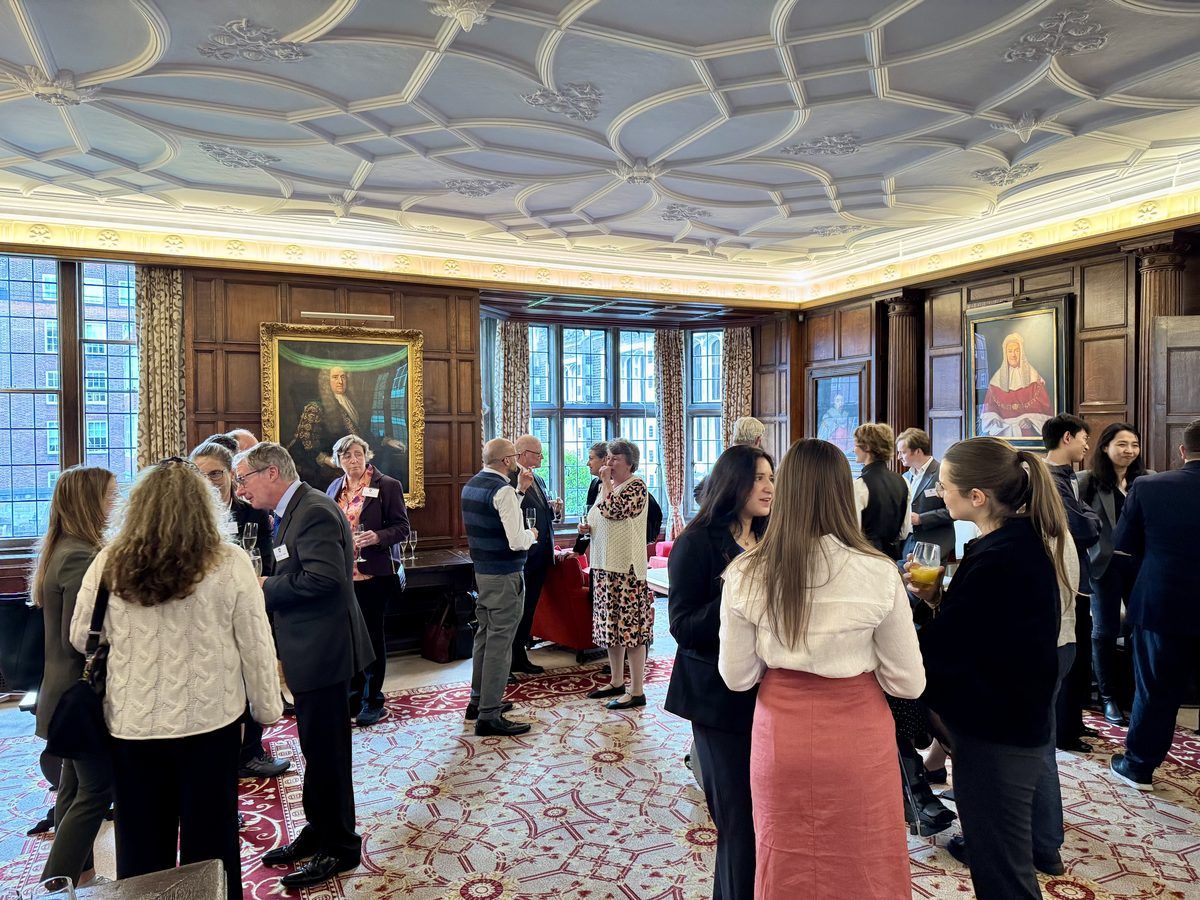
Middle Temple’s Garden Reception and Legal Ethics Discussion brought members together for a Private Guest Night combining professional insight with exceptional Middle Temple hospitality. The evening formed a student Qualifying Session as well. By combining perspectives from both the employed and self-employed Bars, James Frampton, Stuart Alford KC and Chamali Fernando offered practitioner insight into evidential and ethical issues arising in modern litigation, including those considered in the construction matter of Jaevee Homes Ltd v Fincham and an assessment of how the Bar Codes of Conduct and the Bar Standards Board have dealt with instances where barristers had fallen foul of ethical rules via social media. Exploring the implications of social media in legal practice and the evidential challenges posed by informal messaging platforms such as WhatsApp, one recurring theme was the rise of the scenario where formal legal correspondence is met with informal digital responses, occasionally reduced to emoji-only replies. While superficially trivial, such exchanges raise serious questions about evidential clarity, communication standards and professional expectations. As we learnt from James, a thumbs up emoji as a reply was sufficient for evidence to prove a contractual agreement existed between the parties in the Fincham case.
Alongside the formal discussion, the event also provided an opportunity for members to reconnect with the Inn, strengthen professional relationships, enjoy a champagne reception in the garden and participate in a traditional black-tie dinner in Middle Temple Hall. The combination of structured lecture and Inn ceremony remains central to the society’s approach, reflecting the collegiate character of Middle Temple life.
In September 2025, we partnered with the UCL’s Centre for Ethics & Law for a fascinating panel discussion on ‘Artificial Intelligence and the Employed Bar: Exploring the Opportunities and Challenges’, held in Middle Temple Hall with hybrid participation. The panel examined the legal and practical implications of generative AI in legal practice, including its use in research, due diligence and contract analysis, alongside issues of confidentiality, accuracy and professional responsibility.
The event featured contributions from leading practitioners from the self-employed Bar, the employed Bar and academics, including Dr Alan Brener, Alison Cottrell CB, Flora Page KC and Dr Raphael Reims. It provided an opportunity for barristers across sectors to engage with emerging technology and consider its impact on legal work. The event demonstrated the society’s commitment to fostering thought leadership on contemporary legal issues. Later this year, we intend to partner with UCL’s Centre for Ethics & Law again for what we hope will become MTEBS’s signature AI debate, but the plan this time is to explore artificial intelligence in the context of judicial work.
There is clear value in bringing employed barristers together within the Inn. Whether discussing artificial intelligence, regulatory change, ethics or litigation practice, members benefit from perspectives that extend beyond their immediate professional environments.
During Chamali Fernando’s tenure as Chair, visibility within the Inn will remain a central theme for MTEBS. The society exists to ensure that employed barristers are not only present within Middle Temple, but actively engaged in its intellectual, social and professional life. The employed Bar is not separate from the wider profession; it is an integral and increasingly influential part of it.
Ultimately, MTEBS exists to support employed barristers in maintaining strong connections to the Inn, developing meaningful professional networks and contributing to the ongoing life of the Bar. Whether early in one’s career or more senior in practice, the society offers a forum for engagement, dialogue and professional development across all areas of employed practice.
Our society’s next event, ‘Careers to, and within, the Employed Bar’, took place on 19 May 2026. It formed a Qualifying Session and was a great way for student barristers to learn more about access to employed Bar pupillages and the different pathway at the employed Bar. The line-up of speakers included Master Stuart Alford, a partner in the London office of Paul Hastings LLP, Elena Elia of the Wells Fargo, and Coco Keene who works for the CPS.

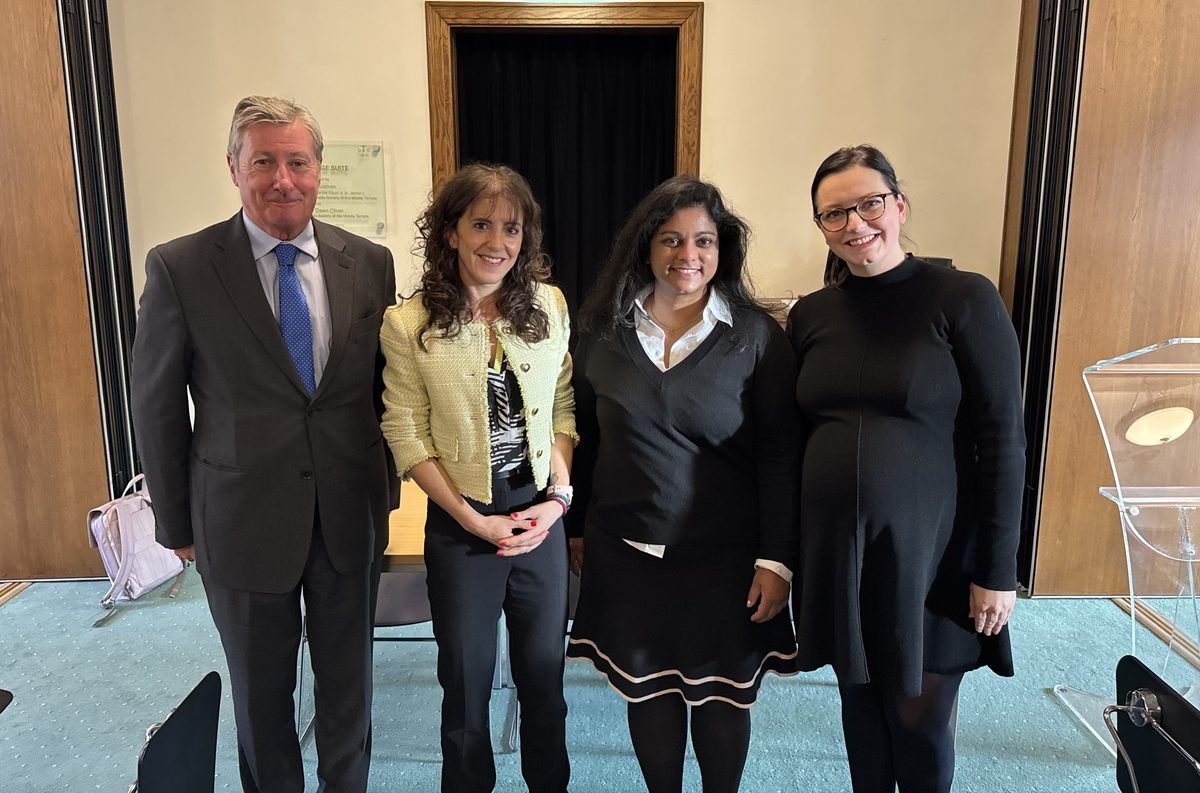
We look forward to welcoming and connecting with members of the Inn and their guests. Membership to the Society is free, and the opportunity to engage with a diverse and evolving community of practitioners is invaluable.
Chamali Fernando is Chair of the Middle Temple Employed Bar’ Society and has experience at both the self-employed and employed Bar, from chambers, to a solicitors’ firm and to an alternative business structure, giving her a broad perspective on modern legal practice and the evolving structure of the profession.