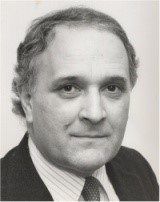
Walter Stafford Aylen was born in May 1937, the son of Bishop Charles Aylen and his wife Elizabeth, and died on Saturday, 15 November 2025. On Friday, 1 April 1966 he married Peggy Woodford, and they had three daughters, Alison, Frances and Imogen.
I should begin with a short history of Walter’s career. He was educated at Winchester College, where he was a scholar, and at New College Oxford where he held a senior scholarship and obtained his MA and BCL. After National Service in 1956 and 1957, he was Called to the Bar at Middle Temple in 1962 (where he became a Bencher in 1991) and became Queen’s Counsel in 1983.
He was appointed a Deputy High Court Judge and Deputy Judge of the Technology & Construction Court in 1993 and served as an Assistant Recorder and Recorder between 1982 and 2003 (including sitting at the Central Criminal Court). He served on the Bar Council from 1994 until 1996.
He was a fine lawyer and advocate and appeared in a number of leading cases in the House of Lords and the Court of Appeal.
I became Walter’s pupil in the summer of 1973, at 2 Garden Court, now 39 Essex Chambers. He very generously told me on my first day that he would, for now, waive the then 100 Guineas required for pupillage, but also told me he may have to revisit it depending on my performance as a pupil barrister. All said with what I was soon to recognise as ‘Walter’s twinkle’.
I had come from four years of teaching and was reasonably confident in terms of public speaking and knowledge of the law. I walked into a room on my first day where Walter and Colin Mackay (also, sadly, recently deceased) were holding court, entertaining each other and anybody else who happened to walk by.
For the next few months, I stayed mainly quiet, completely dazzled by the repartee, wit, and erudition of these two remarkable men. They could both impersonate the judge, the client, the opponent, and weave fantastical stories – in character. But somehow, Chummy Boy of the first part, and Chummy Boy of the third part, always made an appearance. I hope I can speak on behalf of all pupils who had the privilege and pleasure to share time and a room with Walter.
Walter left our chambers to join Hardwicke Chambers (now Gatehouse Chambers) in 1988 and was Head from June 1991 when the chambers moved into their new building in Lincoln’s Inn, a role he held for nine transformative, and punishing, years. After 49 years as a truly exceptional barrister, Walter retired from the Bar in 2011.
Gatehouse Chambers put this tribute on their website –
Walter was not only a brilliant advocate but also a generous colleague and mentor. Those in chambers who knew him will all remember fondly Walter’s unique spirit and storytelling (always with a twinkle in his eye) which came from a generation of advocates who were as at home in the High Court as they were at the Old Bailey.
We are forever grateful of Walter’s immense contribution to our chambers and the legacy he leaves behind.
He was also a superb cricketer.
It may be helpful to those who read this piece to hear a few words from those who worked closely with Walter and can recall moments or events that serve to illustrate his life as an advocate – to use the word from Gatehouse Chambers, his spirit.
I am indebted to Nigel Jones for this anecdote. He was Walter’s pupil in 1976, and later (and currently) head of Gatehouse Chambers.
Walter’s almost invariable technique was to create characters in his submissions who he could then use for explanation and analogy. Nigel was led by Wally in the Hardwicke days at a private tribunal hearing concerning the early use of premium rate telephone lines for quizzes and whether it was illegal gambling. One type of use being considered, and raised by the tribunal, was someone just phoning in and leaving the phone off the hook and thus hoping to get occasional correct answers by default (because the questions all gave rise to yes/no answers and remaining silent constituted a ‘no’) which was potentially relevant to whether they were using skill and care – an aspect of the legislative test). The point Walter and Nigel had to overcome was why anyone would do that when the premium rates were higher than the prizes! Ever resourceful – Walter invented the character of an eccentric Earl in his country castle with nothing better to do. It was very funny and he used it as a riff through the course of his submissions. Louis Blom Cooper was chairing the tribunal and could barely keep a straight face.
A former colleague at Harwicke/Gatehouse Chambers shares this memory:
Walter was a lovely man and a fantastic Head of Chambers. Very old school but fiercely loyal and protective. He also made me laugh.
I remember once when we were all told to ‘dress down’ because of possible May Day riots. Walter wore his suit and his customary floppy silk handkerchief in his top pocket etc… His concession to ‘dress down’ was to wear brown, not black shoes.
Walter was a barrister who looked to the outside world like the most establishment conformist, but he was not. All who knew him had the utmost respect not only for his ability as a lawyer and for his integrity which was inspirational and unshakable – but also for his ability to put bullies (whether they be judges, barristers, solicitors or clients) in their place, usually with good humour, and always without the slightest interest in what the consequences might be for him personally. He sometimes spoke in riddles, mixing stories and memories into conversation. Nigel Jones recalls a report from a senior junior in Gatehouse Chambers who told him, after hearing of Walter’s death, that she was sent off early this century to see him in the Old Bailey. She recalls that she had difficulty in understanding every word he said in chambers and was dreading seeing him in court. But she saw a person transformed, speaking to the jury in clear but beautiful prose and they hung on everything he said.
Walter was a raconteur, bon viveur, and generally a lover of life – qualities that are illustrated by an anecdote from Edwin Glasgow when Walter, and Peggy (together with Colin Mackay and his wife Rosie) were in residence at Entrechaux – Edwin’s and his wife Janet’s house in the south of France. Wine was consumed in generous quantities, and Walter was just a little tipsy. But it was a beautiful night, the stars twinkling, and Walter decided it would be a really good idea to speak to the inhabitants of the village in the square, a couple of hundred feet below the wall on which he was almost balanced. He spoke loudly and at length in perfect French, culminating in this clarion call ‘Citoyens d’Entrechaux, demain à l’aube, nous marchons sur Paris’ (‘Citizens of Entrechaux, tomorrow at dawn, we march on Paris’) – at which point he fell off the wall. Edwin continues – ‘two of the most geriatric pétanque players struggled up the hill the following morning to ask whether, when he disappeared from their view, he had fallen inwards or outwards.’
A final word. Walter was not only a fine lawyer, devoted husband and father, but also the kindest and most entertaining of men. He is greatly missed.
Obituary kindly written by Nigel Pleming KC.