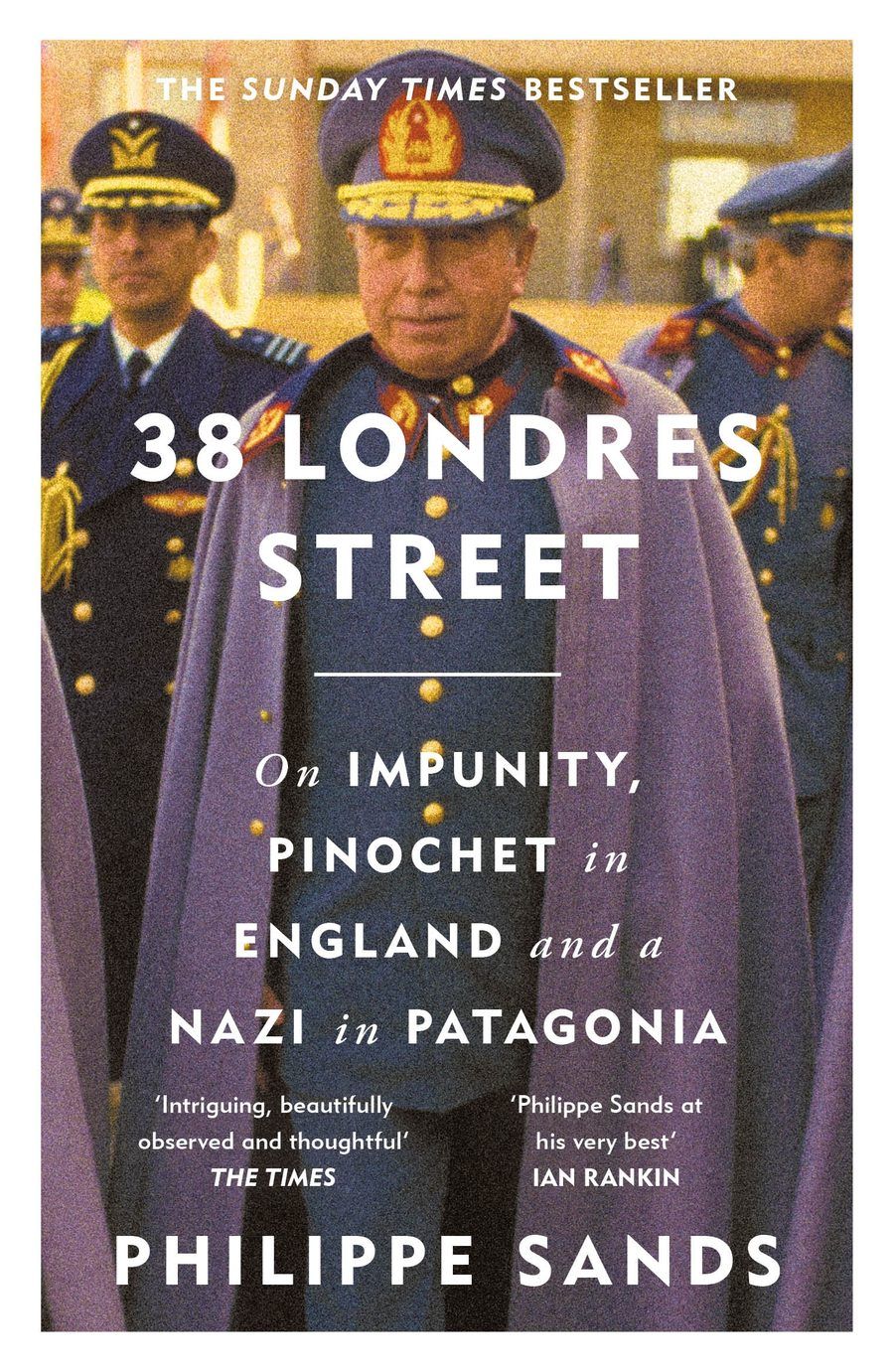
This book, as readers of Philippe Sands’ other books have come to expect, is a model of detailed research, coherent structure and flowing writing.
The chapter headings set the scene – Arrest, Justice, Immunity, Escape, and Impunity. And the first paragraph of the dust jacket summary excites interest and expectation:
Behind the heavy wooden doors of an unassuming building in the heart of Santiago lies a dark history. The house at 38 Londres Street is home to the legacies of two men whose personal stories spanned continents, nationalities and decades of atrocity: Augusto Pinochet, President of Chile, and Walther Rauff, a Nazi SS officer responsible for the use of gas vans.
Walther Rauff had a small part in Philippe Sands’ book Ratlines, the follow-up to the magnificent East West Street. Rauff escaped from an internment camp in Italy and fled to Latin America in 1949, living for a number of years in Quito, Ecuador, before moving to Chile in 1958 at the invitation of then Major Augusto Pinochet to help organise Chile’s internal security organisation.
At this point I should declare a personal interest: I was instructed as leading counsel on behalf of the government of the Kingdom of Belgium in part of the proceedings arising from general Pinochet’s detention.
38 Londres Street begins with the 82-year-old General Pinochet’s arrest in October 1998, when he was in London possibly to purchase weapons and for medical treatment. The arrest was Scotland Yard’s response to an extradition request from a Spanish judge, Baltasar Garzon. General Pinochet could reasonably have expected London to be a hospitable city. When dictator in Chile, he had backed the UK in the Falklands war. He could also reasonably expect that British police would not be interested in allegations by a Spanish judge of kidnap, murder and torture in South America under a junta that had seized power in a coup in 1973, 25 years earlier. Further, and in any event, a former head of state would have diplomatic immunity. Or so Pinochet thought, until officers from Scotland Yard turned up at the private clinic where he had undergone a minor back operation.
Former Prime Minister Margaret Thatcher declared the arrest to be outrageous, unlawful and inhumane, carried out at ‘dead of night’. Others took a very different view.
From that beginning, Sands traces the rise of Augusto Pinochet over the previous decades, but returning regularly to events in London between 1998 and 2000 and his eventual return to Chile in early March 2000. He was never tried or convicted. He died in December 2006.
Philippe also seamlessly weaves into the account the role of Walther Rauff and his interaction with the Dirección de Inteligencia Nacional (DINA), Chile’s secret intelligence service, and the use of 38 Londres Street as a place of torture and death. Walther Rauff was a Nazi SS officer who had overseen the development of gas lorries or vans in Nazi-occupied eastern Europe – vehicles customised to murder their mostly Jewish passengers with diverted exhaust fumes. Rauff evaded prosecution at Nuremberg. In 1962, a few years after he settled in Patagonia he was arrested and might have been extradited to West Germany but a Chilean court decided that a 15-year statute of limitations on his crimes had expired. This is a very brief summary of many pages of description in the book of Rauff’s life story.
The story is all presented to the reader by setting out the results of detailed archival research and painstaking interviews with main and peripheral players in the saga, mainly in Chile, but also in England, Belgium and Spain.
As one would expect, Sands highlights with characteristic clarity the legal aspects of the Pinochet saga. Of particular interest is the description of the House of Lords immunity cases in 1998, when the first decision was set aside because of Lord Hoffman’s undeclared interest as a director of Amnesty International Charity Limited. The treatment of these cases, unsurprisingly, does not have the power of the lengthy and fascinating description of the Nuremberg trials in East West Street, but the analysis and interviews with the various players in that saga are extremely revealing and required reading for any student of judicial decision-making.
A less skilful writer might have lost his audience in the detailed accounts of the legal proceedings and arguments, but Philippe, by moving forwards and backwards in time, and to and from South America, keeps at least this reader’s attention throughout.
The book ends with a short, 13-page chapter titled “Two Men, Two Faces” setting out the consequences, the fall-out, from the London arrest of Augusto Pinochet in 1998. The final few words are part of an interview conversation with Proserpina Fierro, a woman Sands met at a literary festival in Valparaiso:
Pinochet and Rauff? They were alike. Each had two faces. One gentle, the other hard. They were joined.
And they both got away with it.
“Yes” she says.
Sort of.
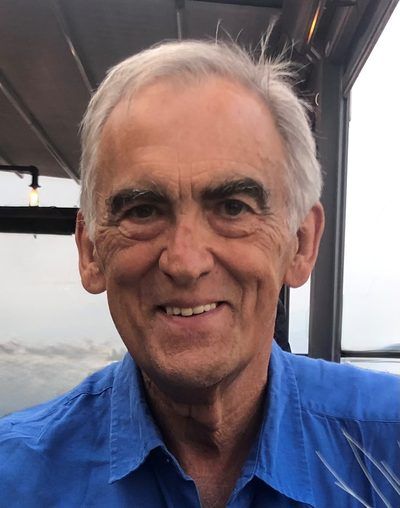
Nigel Pleming KC is a barrister at 39 Essex Chambers, and has practised in the areas of public law, environmental law, and tax law for over 45 years. He has recently co-edited The Law of Net Zero and Nature Positive, written by members of chambers.
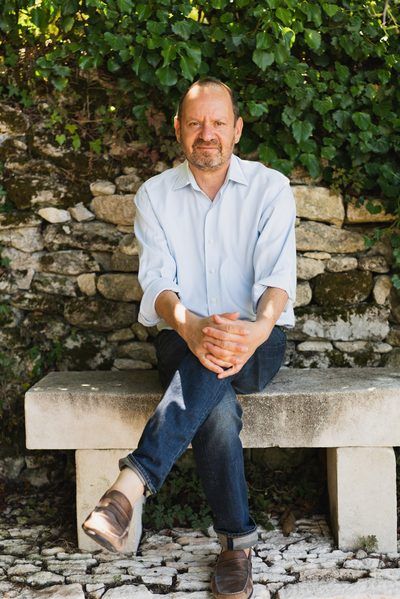
Philippe Sands KC is Professor of the Public Understanding of Law at University College London and Visiting Professor of Law at Harvard Law School. He is a practising barrister at 11 Kings Bench Walk, who appears as counsel before international courts and tribunals, and sits as an arbitrator in international investment disputes and on the Court of Arbitration for Sport. He is author of numerous books, including East West Street: On the Origins of Crimes Against Humanity and Genocide (2016), which won the Baillie Gifford Prize.