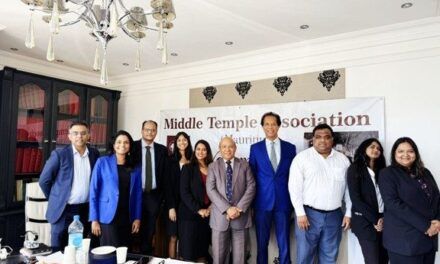
In September 2025, Middle Templars headed off to The Hague in The Netherlands for an Amity Visit. There were 112 members taking part, including students, barristers and judges, ably led forth by Master Treasurer Kate Thirlwall. The theme underlying the Amity Visit was international law, and its impact on national legal systems. The Hague was the obvious place to hold such a visit – it is the home of the International Court of Justice (ICJ), dealing with disputes between states, the International Criminal Court, dealing with those accused of war crimes and crimes against humanity and the Dutch Supreme Court. The aim was to have a series of speakers on different aspects of international law, and a series of panels involving both a Dutch and a British lawyer addressing the impact of international law on specific areas of law in our respective systems.
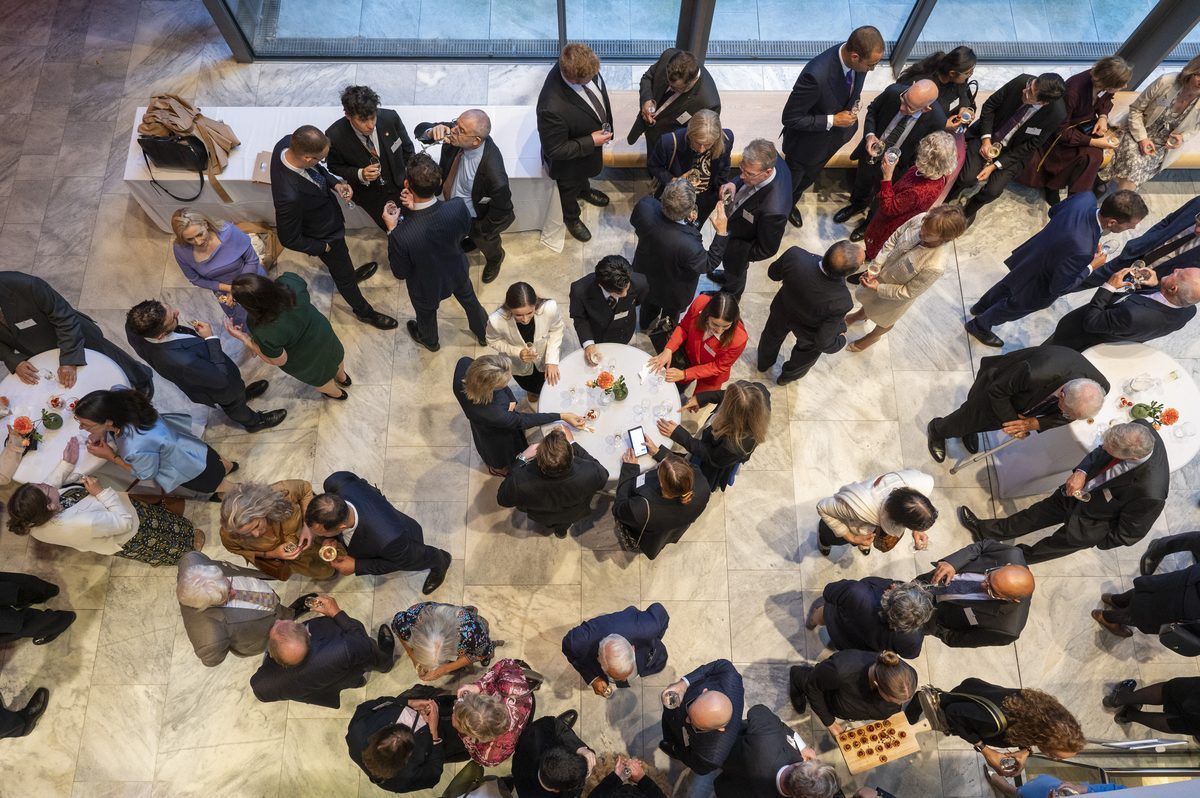
First, on the evening before the hard work of the talks and the sessions began, we started with a reception at the Sociëteit de Witte, one of the oldest private clubs in The Netherlands, formed in 1782 and nestled between the Dutch Parliament (the Binnenhof) and the Mauritshuis (home of Vermeer’s portrait of Girl with a Pearl Earring). That gave us all the chance to get know each other, and our Dutch colleagues.
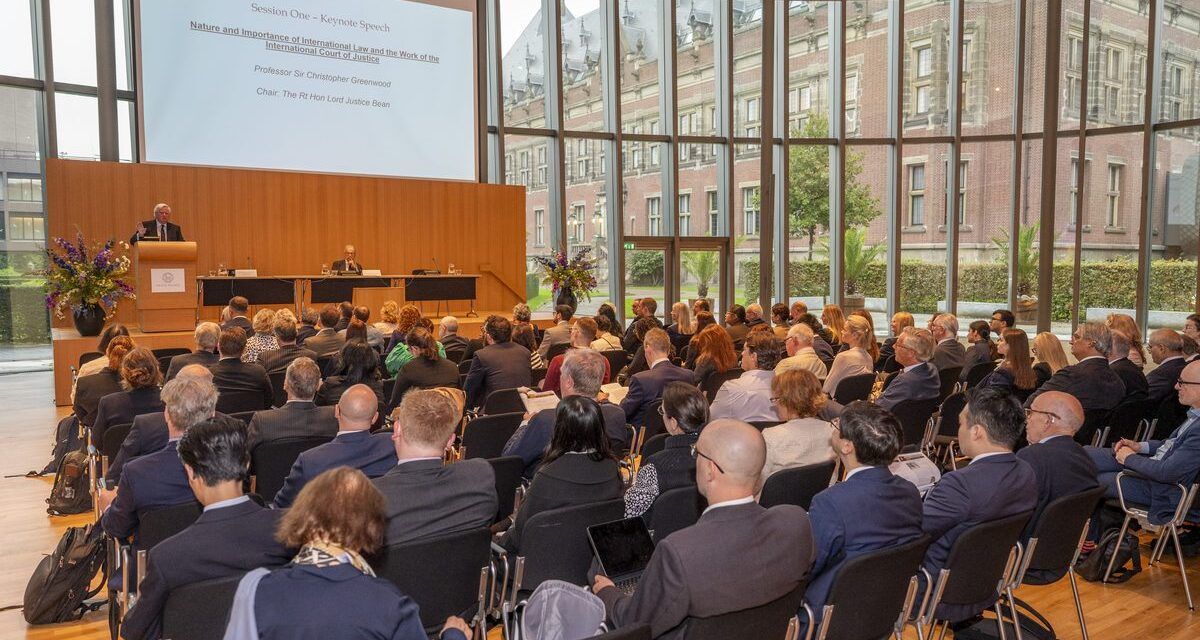
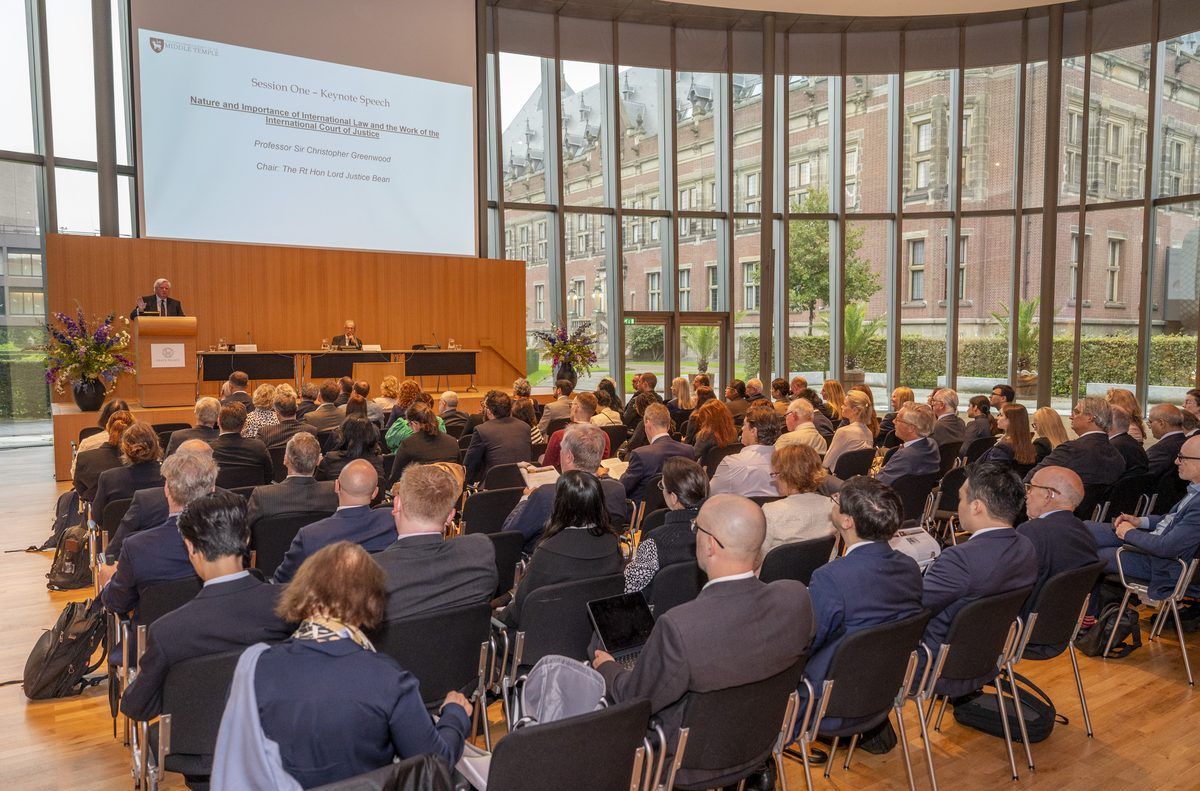
The next day saw the beginning of a packed programme of talks and panel sessions. The conference was held in the Carnegie Foundation conference centre, within the grounds of the Peace Palace, which is home to the International Court of Justice. We began with an opening address from Master Christopher Greenwood on the nature and importance of international law and the work of the International Court of Justice – and, as Master Greenwood had sat as a judge on that court for years, no one was better placed to give us an oversight of that topic. That was followed by a seminar with talks from Master Philippe Sands (who practises at the ICJ, and is a well-known academic and writer on topics of international law) and Professor van den Herick, a professor at the University of Leiden in The Netherlands, on the cases and the work of the ICJ. The same pattern was followed over two days, with a British and a Dutch lawyer giving their perspective on how a particular area of international law affected their respective legal systems. The sessions covered modern slavery law (with Ben Douglas-Jones KC and Judge Kees Klomp) and environmental law (with Master Jessica Simor and Judge Paul Glazener from the Dutch Court of Appeal). We also had sessions on commercial law and sanctions (from Masters Derrick Dale and Marie Demetriou). Finally, we heard about the work of the International Criminal Court from the British Judge, Judge Joanna Korner, and Master Stephen Powles.
In addition to the panel sessions, we also had speeches from individuals. One was by Professor Martin Kuijer who is a judge of the Dutch Supreme Court and a member of the Venice Commission. Professor Kuijer spoke on the work of the Commission, which is the advisory body on constitutional law issues for the Council of Europe. He gave a sobering example of how, in four stages, a European state had progressively sought to dismantle the independence of the judiciary through changes in the law governing retirements, appointments and other methods. We also heard from Master Yevhen Synelnykov, a judge of the Supreme Court of Ukraine. He gave a gripping talk on the administration of justice in a time of martial law. He explained the challenges of keeping the basic system of administration operating in circumstances where courts were bombed and destroyed or damaged, lawyers and staff were conscripted, and the power infrastructure repeatedly bombed. Nonetheless, the judges, lawyers and staff in Ukraine had managed to keep the court system functioning. Master Synelnykov was given a spontaneous standing ovation, as a mark of respect to him, and to the courage of the people of Ukraine. We concluded the sessions with an address from Master Eleanor Sharpston.
Other events included a conference dinner held, appropriately, in the undercroft at the International Court of Justice. We were addressed by Master Sarah Cleveland, a member of the ICJ who spoke about the importance of international law in the current climate. Our final visits were to the Dutch Supreme Court and then to the International Criminal Court. We were welcomed to the Court by its president, Judge Tomoko Akane, an Honorary Bencher of Middle Temple. We saw the courtroom where some of the trials of war criminals had taken place. The system of international criminal justice was explained by two lawyers with the Court. It has a separate prosecutorial department. Procedural matters such as the issuing of arrest warrants are dealt with by a panel of judges. Finally, a trial takes place before a panel of judges. We were surprised and shocked to learn that the United States has applied wide ranging sanctions to some of the prosecutors and judges in protest at some of the decisions taken.
The Amity Visit was great success. The Hague was a superb setting. The chance to meet other Middle Templars, and lawyers from Holland and Ukraine was enjoyable. The visits to other courts were fascinating. The talks and lectures were full of information and insight. We are grateful to all our speakers and chairs. Some of the talks also left us realising that, across our continent of Europe, and beyond, there are challenges to the maintenance of the rule of law and inspired a renewed commitment to that ideal.
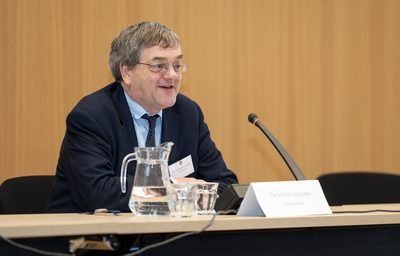
Master Clive Lewis is judge of the Court of Appeal of England and Wales. He was a judge of the High Court from 2013 to 2020 and was a Presiding Judge for Wales from 2016 until 2019. Prior to that, he practised at the Bar from 1992 primarily in the field of public law. He was an academic lawyer and a Fellow of Selwyn College and Lecturer at the University of Cambridge before he began practice. He is a Master of the Bench of the Middle Temple.