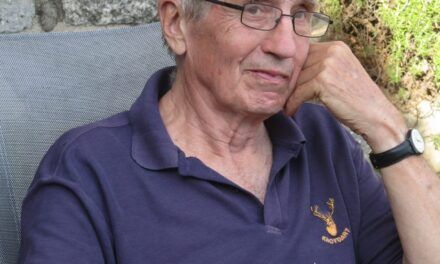
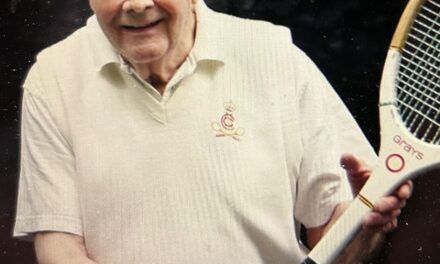
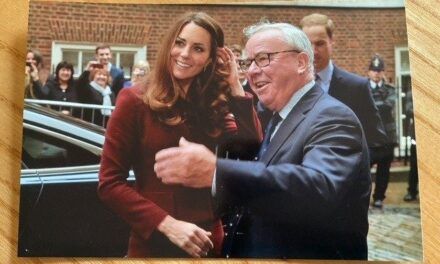
In the Juryman’s Tale, journalist Trevor Grove’s account of jury service on a long kidnapping trial at the Old Bailey, Michael Gale, leading counsel for the main defendant, was portrayed as a one-dimensional figure – a master of rhetoric but given to prolonged and aggressive cross examination. This caricature failed to do justice to an outstanding advocate, rooted in the courtesies and style of the past, equally at home prosecuting or defending in a murder, a fraud or any serious crime. Gale was also a man of many parts, he mastered several languages, was well versed in the classics and built an extensive collection of antique porcelain.
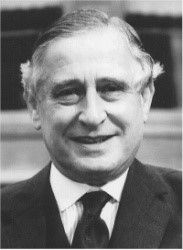
Born in 1932 into a family who had arrived from Tsarist Russia in the 19th Century, Gale spent the war years in Cheltenham, but the family settled in north London in 1945, and he went to the Grocers School (aka Hackney Downs) where Harold Pinter and later Michael Caine also studied. He set his sights on Cambridge University and won an exhibition to King’s College where he read history for two years before switching to law for his final year. After leaving his beloved Cambridge, compulsory military service did not agree with Gale, but he was saved by a surprise and secret transfer from garrison duty at the Tower of London to Scotland to learn Russian and train as an interpreter. Fortuitously after mastering basic Russian, he and 11 others were ordered to complete their studies at Cambridge. The syllabus focused on the classical Russian of Pushkin and Tolstoy rather than everyday speech, so it was perhaps fortunate for national security that Gale’s national service came to an end after two years and he left the army to begin life as a barrister.
After Call to the Bar in 1957, Gale obtained pupillage under John Gower, one of the finest advocates of the time at 6 Pump Court, which became his chambers home for half a century. In 1963 he met Joanna Bloom, another young barrister at Kingston Quarter Sessions and later that year they embarked on over sixty years of married life, later raising three children at their home near Tunbridge Wells.
Gale soon became the star attraction in his chambers. Never softly spoken, his voice earned the nickname ‘Gale Force,’ and it was said that if he was speaking in the robing room at Maidstone, he might well be heard in the court corridors in Canterbury. At the same time, there were quieter moments. One of his last pupils recalls a rare day in chambers waiting for a conference to start when Gale borrowed his copy of The Times asking if he could do the crossword. ‘Oh no you’ve started it, I won’t spoil it for you’ he said, noting the pupil had managed a pitiful total of five clues. Within 20 minutes he put the paper down announcing he had completed the puzzle without committing a single answer to paper much to the frustration of his pupil.
He took silk in 1979, and his chambers flourished and grew under his leadership from 1984. Gale also sat as a Recorder at the Old Bailey which he seemed to enjoy. By all accounts and to the surprise of some he was an excellent judge, sound on the law, saying very little and rarely interrupting. He would surely have made a very good trial judge but the only call he might have accepted (to the High Court Bench) never came.
The 1990s were turbulent times for the Bar as chambers around the Temple adjusted to the need for modern governance structures to regulate relationships between members. Professional democracy did not sit easy with Gale who viewed himself as the most benevolent of autocrats. It was hard for him to accept the view that the vote of the most junior and inexperienced tenant should now be accorded the same weight as that of the Head of Chambers with all his experience of 40 years in the Temple. Gale did not adjust well to ceding the role of Head of Chambers and soon after accepted an offer from James Townend QC (as he then was) at 1KBW where he continued to practice and for some years to advise the National Heritage Memorial Fund.
As his health declined, he spent more time at home enjoying his garden and the company of his devoted wife and family. Michael is survived by Joanna, his son Edward and daughters Sarah and Rachel.