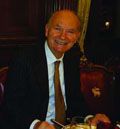
The death of John Lorn McDougall KC at the age of 86 marks the passing of one of the most outstanding Canadian advocates of his generation and a figure whose career bridged two related but distinct worlds: the courtroom and the arbitral tribunal. To many Canadian lawyers he was simply ‘JL’, a larger-than-life presence whose standards were exacting, whose confidence was legendary, and whose commitment to advocacy never wavered.
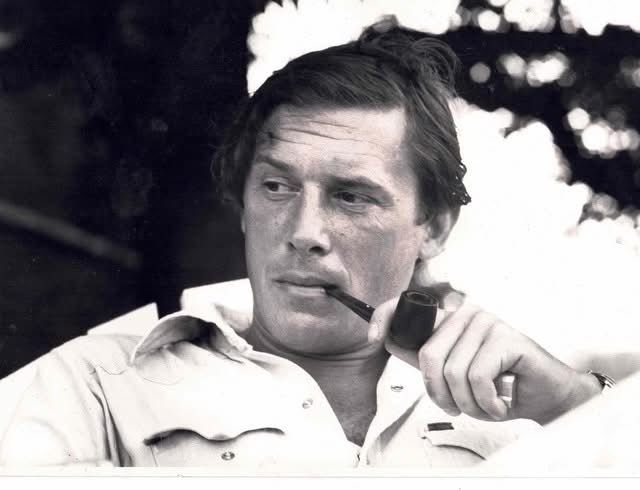
JL was called to the Ontario Bar in 1968 and spent the entirety of his professional career, some 46 years, with Fraser & Beatty in Toronto and its successor firms. In Canada’s fused legal profession, JL remained as close to a barrister, in the English sense of the term, as one was likely to encounter. He devoted himself to advocacy, relished the contest of ideas, and became one of the country’s most respected courtroom lawyers.
His reputation as counsel was built over decades. He appeared before courts across Canada, including at least five times before the Supreme Court of Canada. He was Called not only in Ontario but also in Alberta, the Northwest Territories, Yukon and Nunavut. One of his favourite stories concerned litigation involving the Hunt brothers of Texas and assets located in Canada’s Far North, which carried him to a small courthouse in Yellowknife in mid-winter to obtain what is widely regarded as one of Canada’s earliest Mareva injunctions. He loved the law, but he also loved the adventure that occasionally accompanied it.
Like many distinguished advocates, he belonged to an older tradition in which the craft of advocacy was acquired through close apprenticeship. He joined Fraser & Beatty as the junior of the legendary Barry Pepper (himself a Bencher of Middle Temple) and consciously sought to emulate the great advocates who had shaped the Canadian Bar. In time, he himself became one of those figures. Generations of younger lawyers learned their trade under his supervision, often finding his criticisms memorable and occasionally painful, but invariably directed toward a single objective: excellence. He could be demanding, even formidable, but many who worked with him later recognised that this demanding mentorship was one of his greatest gifts.
His connection with Middle Temple reflected his affinity for the traditions of the independent Bar. He became an Honorary Bencher in 2013, having maintained close ties with the Inn throughout his career. He was also an honorary overseas member of the Commercial Bar Association of England and Wales. Although his practice was firmly rooted in Canada, he possessed an unmistakably British conception of advocacy: rigorous preparation, intellectual discipline, clarity of expression and an unwavering focus on the decisive issue.
Perhaps more than any other Canadian advocate of his generation, JL perceived the opportunities that international arbitration would create. Following Canada’s adoption of the UNCITRAL Model Law in the 1980s, he recognised that a significant part of the future of commercial dispute resolution would lie beyond national courts. While still in active practice he became deeply involved in international arbitration, and over time emerged as one of Canada’s best-known arbitrators.
For more than three decades he sat as chair, sole arbitrator and party-appointed arbitrator in complex commercial disputes around the world. He served as Chair of the Canadian National Arbitration Committee of the International Chamber of Commerce and as Canada’s representative on the ICC Commission on Arbitration in Paris. He was also a Fellow of the Chartered Institute of Arbitrators and a member of numerous leading arbitral institutions. His stature in the field helped establish Canada as a serious participant in the international arbitral community.
Yet professional achievement alone does not explain the affection in which he was held. Colleagues remember his generosity, his loyalty and his capacity for friendship. He was a devoted husband, father and grandfather; an enthusiastic skier, fisherman and conservationist; a lover of dogs and of the outdoors. He enjoyed travel, good lunches and good stories, and possessed an inexhaustible supply of both.
One of my more memorable exchanges with JL occurred when I was appointed to the Bench. Upon hearing that I was leaving practice to become a judge, he observed, with characteristic directness, that the normal course of events was for judges to leave the Bench and become arbitrators, not the other way around. I had clearly not received the memorandum. The remark was quintessential JL: amusing, slightly pointed, and delivered with complete conviction.
To the end, he remained what mattered most to him: an advocate. Whether before a court, at counsel table, or presiding over an international arbitration, he represented a tradition of advocacy increasingly rare in modern practice. The Canadian profession has lost a distinguished lawyer, Middle Temple a loyal Bencher, and many former colleagues and pupils a valued mentor and friend.
He will be long remembered.
Obituary kindly written by Master Graeme Mew, with thanks to Master McDougall’s colleagues Norm Emblem, Mike Schafler and Matthew Fleming who provided Master Mew with their notes of tributes given at the Dentons Canada Litigation and Dispute Resolution dinner on Wednesday 17 December 2025.