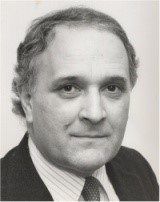
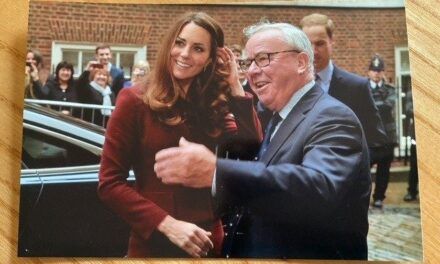
Born in 1929, the year of the Great Depression, and in common with many of his generation, Eric had a tough start in life. Perhaps it was the turbulent times of his youth that helped drive him to work for a better world.
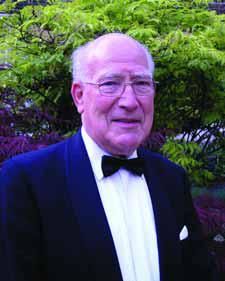
Matriculating two years early, Eric left school at 14 and following family precedent soon landed a job in journalism, firstly at the Daily Herald before moving on to Reuters, where he worked at the monitoring station at Hadley Woods. On Tuesday, 6 June 1944 at 4am, the first news of the Allied D-Day landing to reach the UK came in over the ticker tape from an intercepted German news agency flash – Eric was delighted both with the news, and to be amongst the first in the country to hear it.
A move to working in a solicitor’s office and a look at the alternatives led Eric to trying for admittance to the Bar and he was admitted to the Middle Temple in November 1946 aged 17, and Called in June 1950, at the minimum permitted age of 21.
In the intervening years Eric was called up for military service and was eternally grateful to the army for posting him to Formby whereby he met the love of his life, Joan, with whom he subsequently had two sons.
The slow establishment of a legal practice, and the even slower process of receiving payment from solicitors, led Eric to supplementing his income writing law reports and articles. An early piece published in The Times on ways to improve the legal system induced Arthur Gollancz to commission Eric’s first book, which compared our system with those of Scandinavia and Holland, and he tried to draw the best from those more forward looking examples. Researching and writing continued in parallel to his day job throughout the remainder of his life. His particular strength in historical research was his patience and ability to read and interpret original documents with their wide variety of vocabulary, spellings, writing styles and writing implements!
Eric was an active participant in many organisations and institutions. His studies fed into his participation in institutions, his activities in institutions fed into his writing, and in some instances his writing influenced law and practice in the justice system. The following are just some of the organisations he was active in, President, or Chair, in some cases from a very early stage of their existence:
- Supreme Court Procedure Committee
- Central Council of Probation Committee
- The National Association for the Care and Resettlement of Offenders (NACRO)
- The Institute for the Study and Treatment of Delinquency (ISTD)
- Central Council for Education and Training in Social Work
- The Howard League for Penal Reform
- The British Society of Criminology
- The Society of English and American Lawyers
- The Marriage Guidance Council
- Criminal Injuries Compensation Board
- Criminal Injuries Compensation Appeals Panel
- Queen Mary and Westfield College
- London University
- University of Hertfordshire
Within the sphere of employment rather than freelance work, Eric was the youngest Circuit judge ever appointed in 1972 at the age of 43. We believe he had a reputation for fairness and understanding, particularly in family law, as well as the ability to work effectively and efficiently through his list to ensure that in so far as it were possible, delay in his court would not be the reason for justice denied. After retiring from the Bench he much enjoyed his role on the Criminal Injuries Compensation Board, feeling that it was an area where one could exercise personal judgement to facilitate justice, where perhaps the stricter rules of criminal law were unable to do so.
During his retirement, being a Bencher of the Middle Temple was greatly valued, and the opportunity to contribute to the recorded history of the buildings and institution was seized upon with the usual alacrity. Eric remained incredibly mobile, active and alert, looking after himself and his gardens into his last year, and passed away peacefully after a brief decline at the age of 96, leaving two sons and at the time, seven grandchildren and four great grandchildren.
Master Eric Stockdale’s Bibliography
- The Court and the Offender — Gollancz, 1967
- A Study of Bedford Prison 1660-1877 — Unwin Brothers, 1977
- Law and Order in Georgian Bedfordshire — Bedfordshire Historical Record Society, 1982
- The Probation Volunteer — The Volunteer Centre, 1985
- Stockdale and Devlin on Sentencing — Waterlow Publishers, 1987
- Consultant Editor for Blackstone’s Criminal Practice from Inception — Blackstone, 1991
- Criminal Justice Under Stress (with Silvia Casale) — Blackstone Press, 1992
- ‘Tis Treason my Good Man! Four Revolutionary Presidents and a Piccadilly Bookshop — Oak Knoll Press, 2005
- Middle Temple Lawyers and the American Revolution (with Justice RJ Holland) — Thomson West, 2007
- From Wig and Pen to Computer — Wildy Simmons and Hill, 2008
- The Man who Shot the President — Wildy Simmons and Hill, 2008
- Further and Worse Particulars — Wildy Simmons and Hill, 2009
- History of the Middle Temple, Chapter 5 — Hart Publishing, 2011
- Send for Benson! — Oblong Creative, 2015
Plus numerous articles in assorted papers and journals.
Obituary kindly written and provided by Master Eric Stockdale’s family.