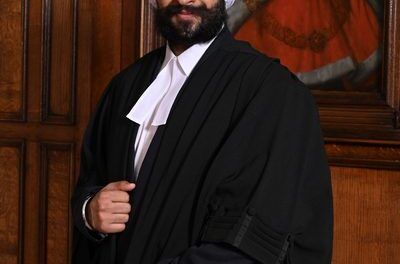
Budaun, a quaint city in the north Indian State of Uttar Pradesh, is world-renowned for its Sufi saints and Urdu poets. However, a lesser known aspect is Budaun’s legal legacy. The city has produced many eminent lawyers who left an indelible mark on history. Ever since the mid-19th Century, the Indian subcontinent has had a deep connection with the Inns of Court, with innumerable Indian leaders being members of these ancient institutions. With the introduction and development of common law in India after the advent of the British, an increasing number of Indians began practising in the courts of law. Eventually, around the mid-19th Century, Indians started coming to England to get Called to the Bar. Many of them would pursue studies at Oxford or Cambridge, or would write the Indian Civil Service (ICS) examinations, and would also study for the Bar alongside. By the early 20th Century, the number of Indians at the Inns of Court had significantly increased, and it had become a common practice for elite families to send their children to England to become barristers. Most of these young barristers belonged to families of aristocrats or bureaucrats in the British Raj. During the 1920s and 1930s, almost every district in British India would have a handful of barristers practising in the district courts, whereas major cities like Calcutta, Madras, Bombay, Allahabad, Lucknow, Lahore and Karachi, which were seats of the High Courts (or judicial commissioners), had an even more significant number of them.
Budaun, then a town in the Northwestern Provinces, and Oudh (and later in the United Provinces of Agra and Oudh, colloquially known as ‘UP’), was no stranger to this culture. Over more than a century, it produced numerous barristers, some of whom practised (or rendered other services to the government) in Budaun itself, while others worked in important cities like Allahabad, Aligarh as well as London. Besides, the city was also home to a few non-native barristers who had settled in Budaun.
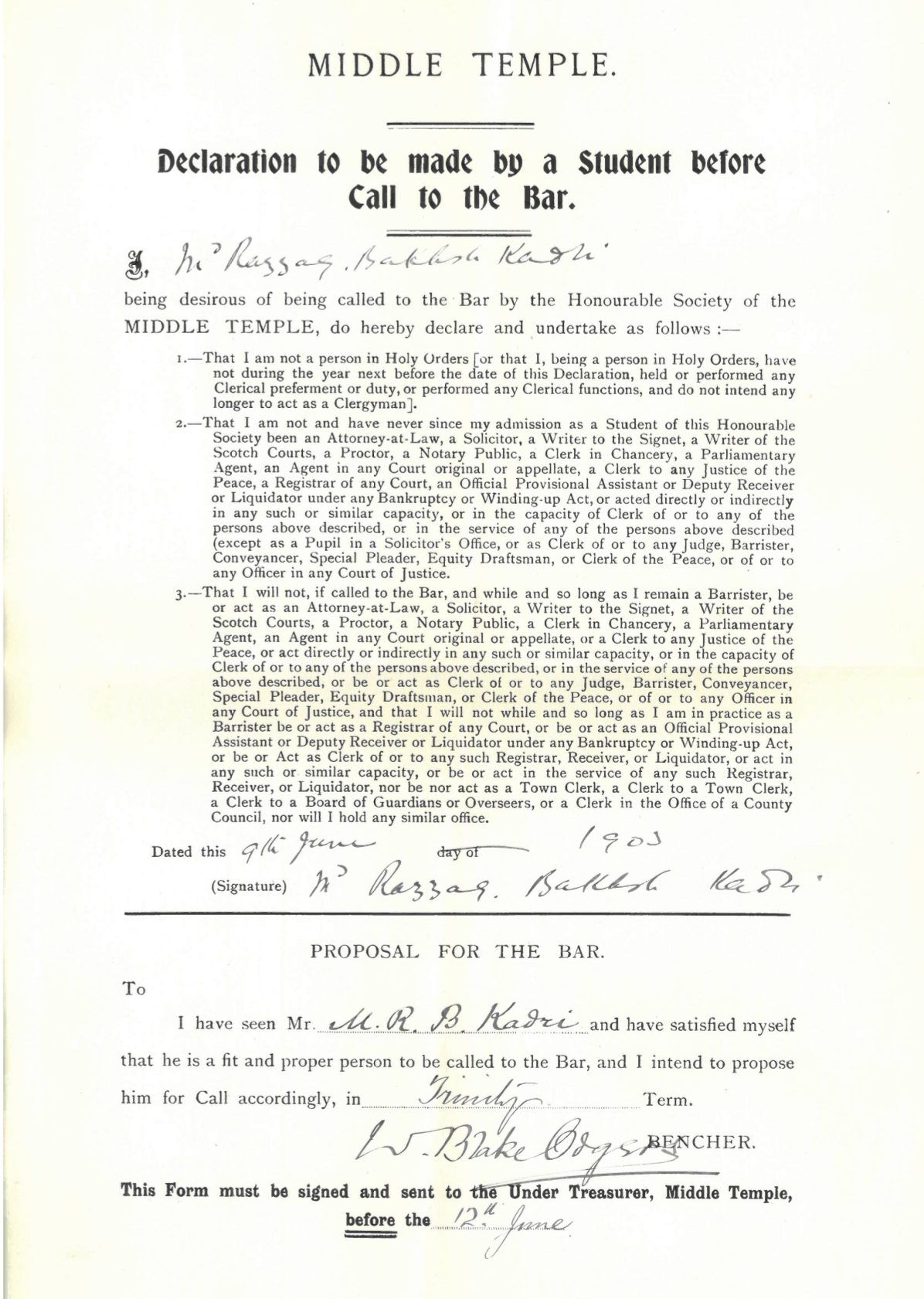
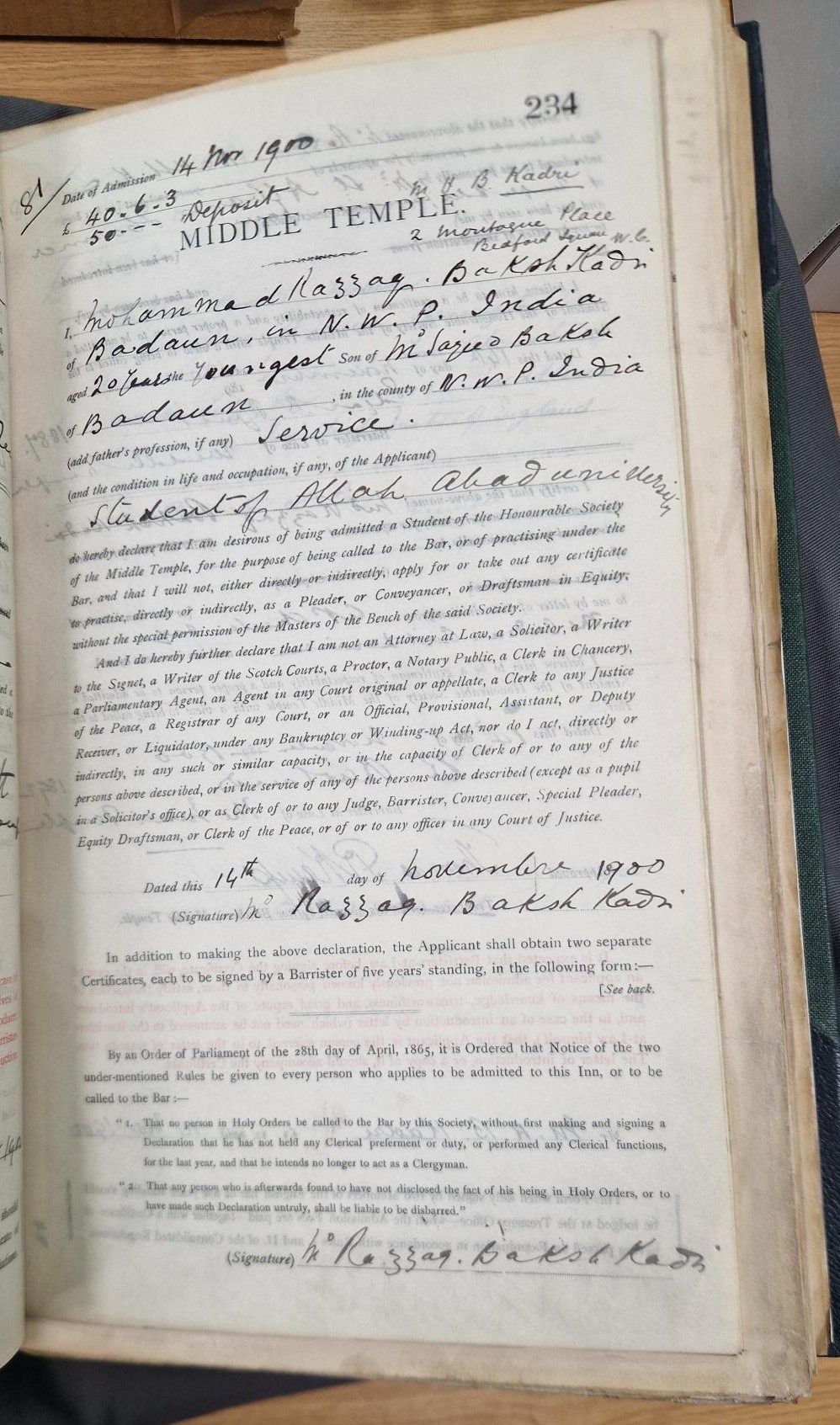
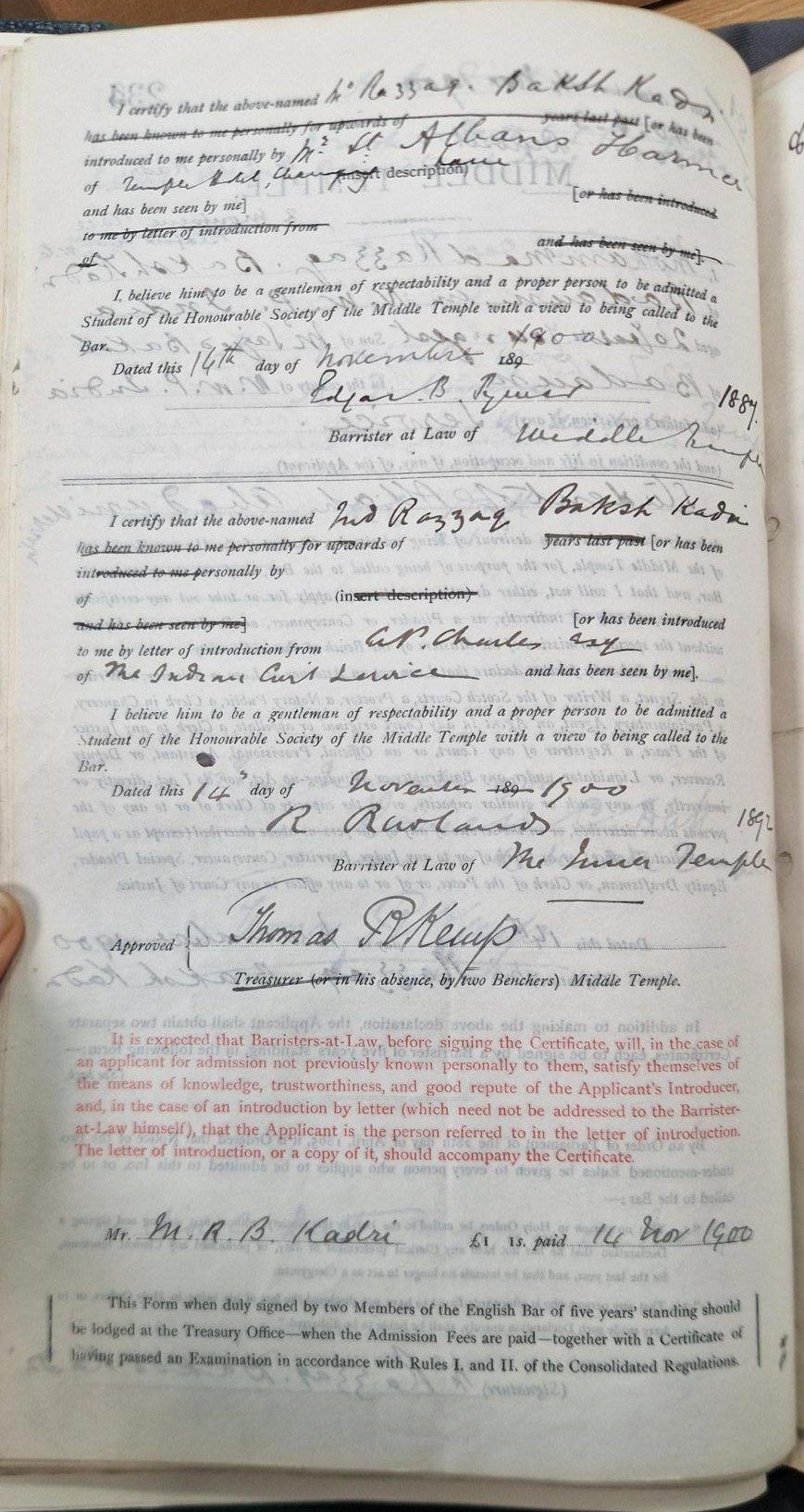
The saga begins at the dawn of the 20th Century, when Mohammad Razzaq Baksh Qadri was admitted to the Middle Temple on Wednesday, 14 November 1900, at 20 years old. Belonging to the noted Baksh (or ‘Baqsh’) family of Budaun, his father Mohammad Baksh was a zamindar (landowner) while his other kinsmen, Maulvi Hamid Baksh and Khan Bahadur Maulvi Waheed Baksh had served as chairmen of the Budaun Municipal Board. A graduate of Allahabad University, Qadri lived at 2 Montague Place, Bedford Square in London. After being Called to the Bar on Wednesday, 24 June 1903, he returned to India and started practising in Aligarh District Court. Until 1912, Budaun did not have a judgeship, and only two munsifs (low-ranking judicial officers) were stationed there. Qadri represented the Crown as a special counsel in the famous Chauri Chaura Trial in 1922-23. He built a grand mansion (Kothi) on Fasih Uddin Road in Budaun, known as ‘Qadri Manzil’, where Mahatma Gandhi had once stayed in 1921 during his visit to Budaun. The building stands to this date, albeit in a dilapidated condition and with changed ownership. Qadri’s name was recommended for elevation as a Judge of the Allahabad High Court, however, he died circa 1940, before his appointment. His son was an ICS officer who migrated to Pakistan after the partition of India in 1947, and subsequently served as Chief Secretary of East Pakistan.
The second in this chain is Ibne Ahmad, a graduate of Allahabad University, who was admitted to Lincoln’s Inn on Tuesday, 16 October 1906. He was a scion of the Tonkwala-Hameedi family of Siddiqui Sheikhs who were amongst the richest feudal barons and were early pioneers of English education in Budaun District. His father, Maulvi Wazeer Ahmad was the first graduate and largest zamindar (landowner) of the district, as well as an honorary first class magistrate; while his grandfather and granduncle Maulvi Muhammad Hasan and Hafiz Ahmad Hasan had served as Chief Ministers of the Nawab of Tonk, and the latter had also written Pilgrimage to the Caaba and Charing Cross, a travelogue of his journey to London in 1869 which provides a detailed account of English society as well as administration of justice, and education in England. His brother Qasim Hasan was a Provincial Civil Service (PCS) officer who served in United Provinces and later under the Nizam of Hyderabad. Ibne Ahmad was a close friend and contemporary of India’s first Prime Minister Jawaharlal Nehru, and practised in Allahabad High Court. He also served as a member of the court (senate) of Aligarh Muslim University in the 1920s. He was the author’s great-granduncle, being the brother of Bibi Qamar Jahan Begum who was the author’s great-grandmother.
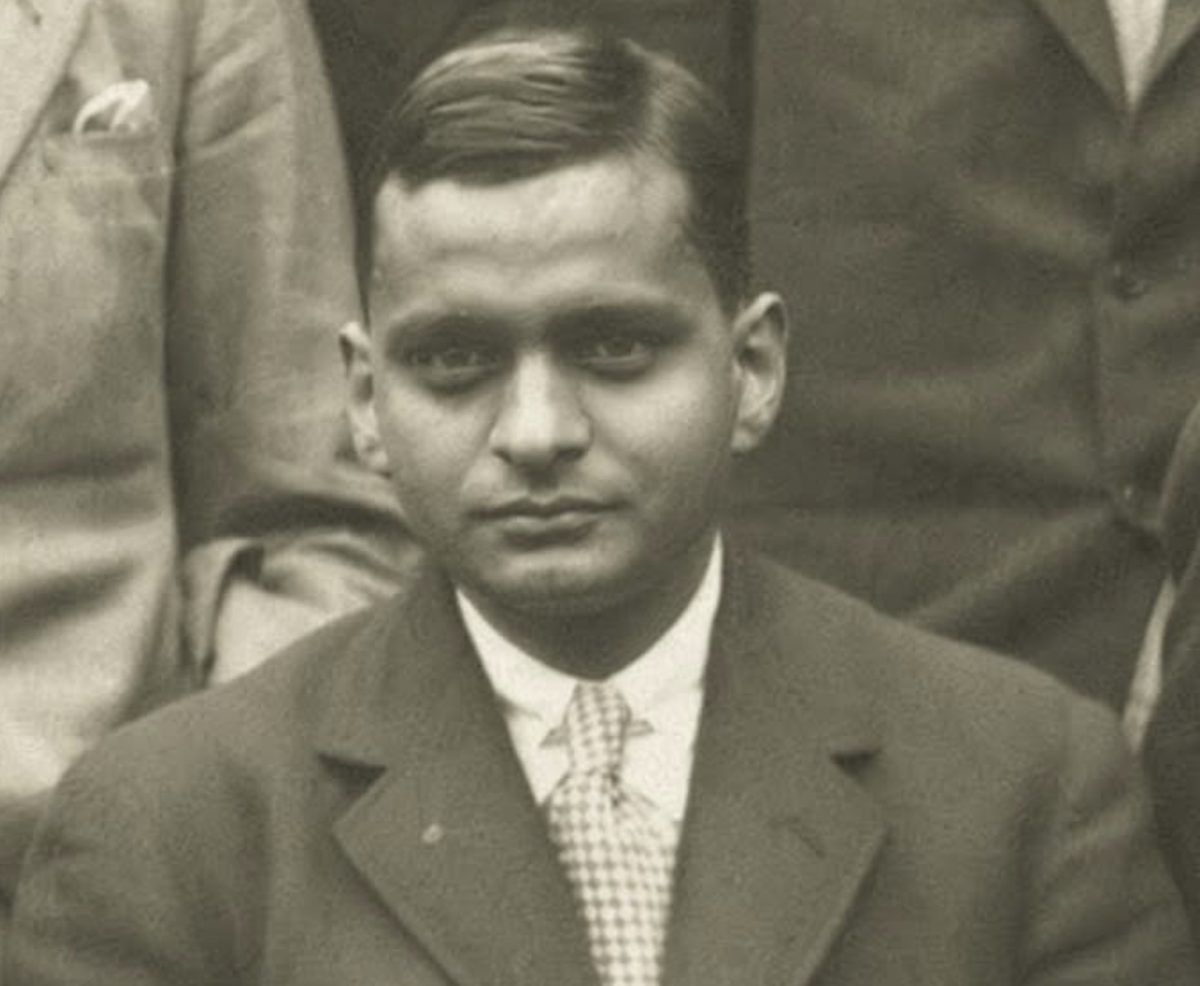
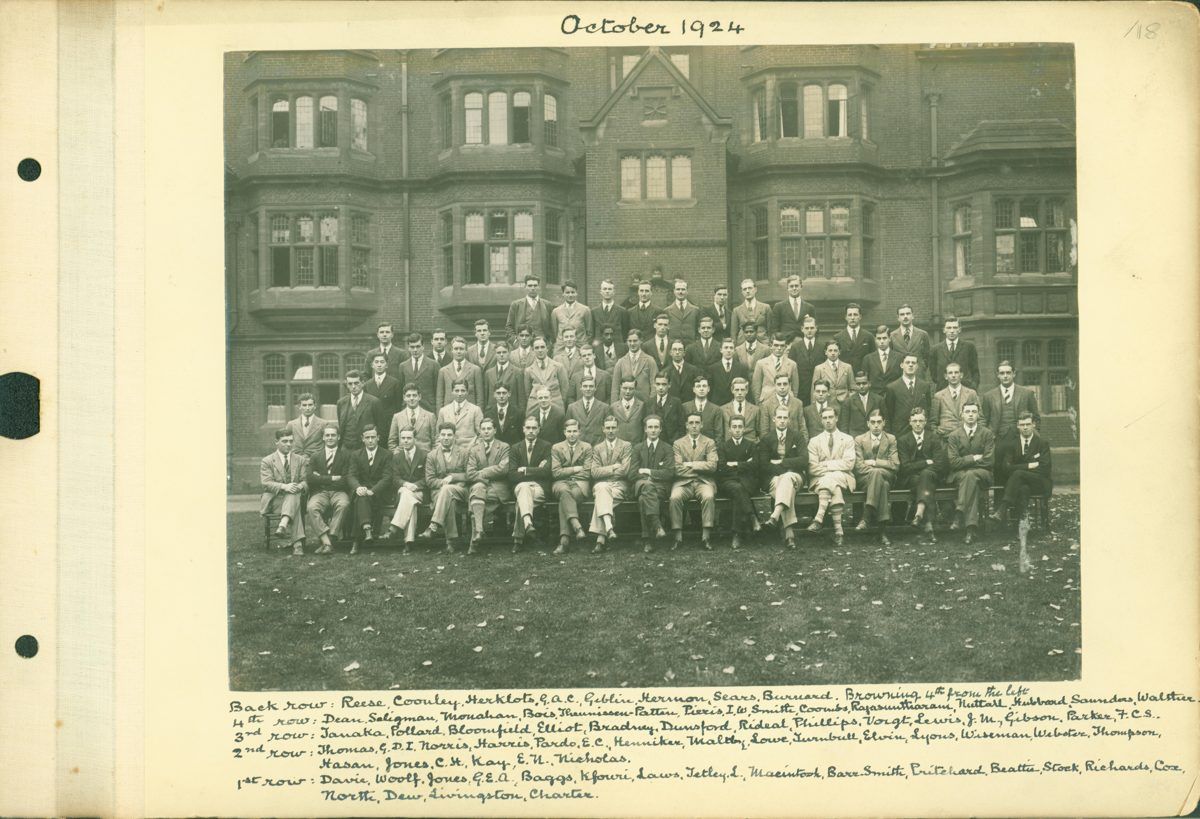
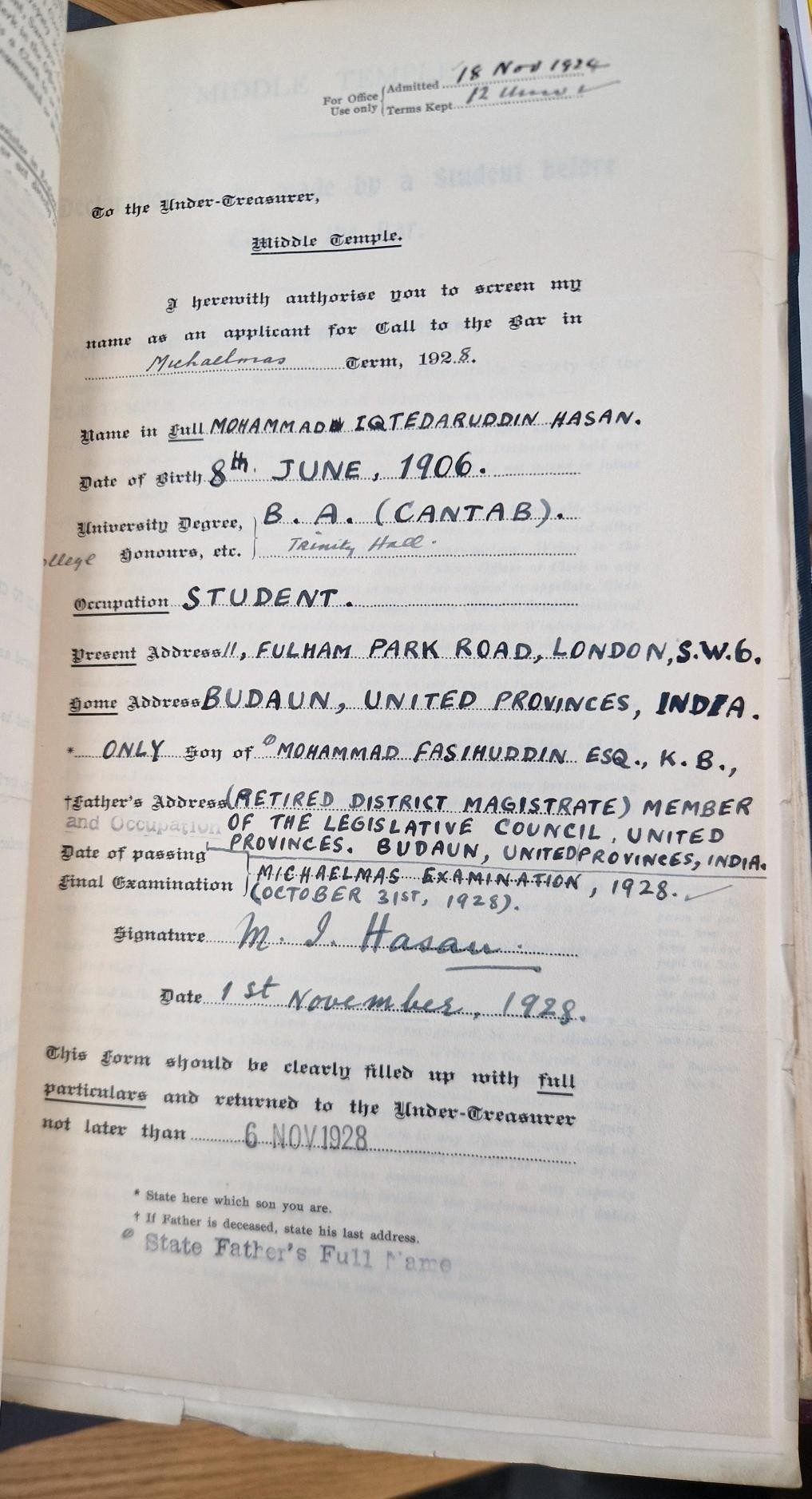
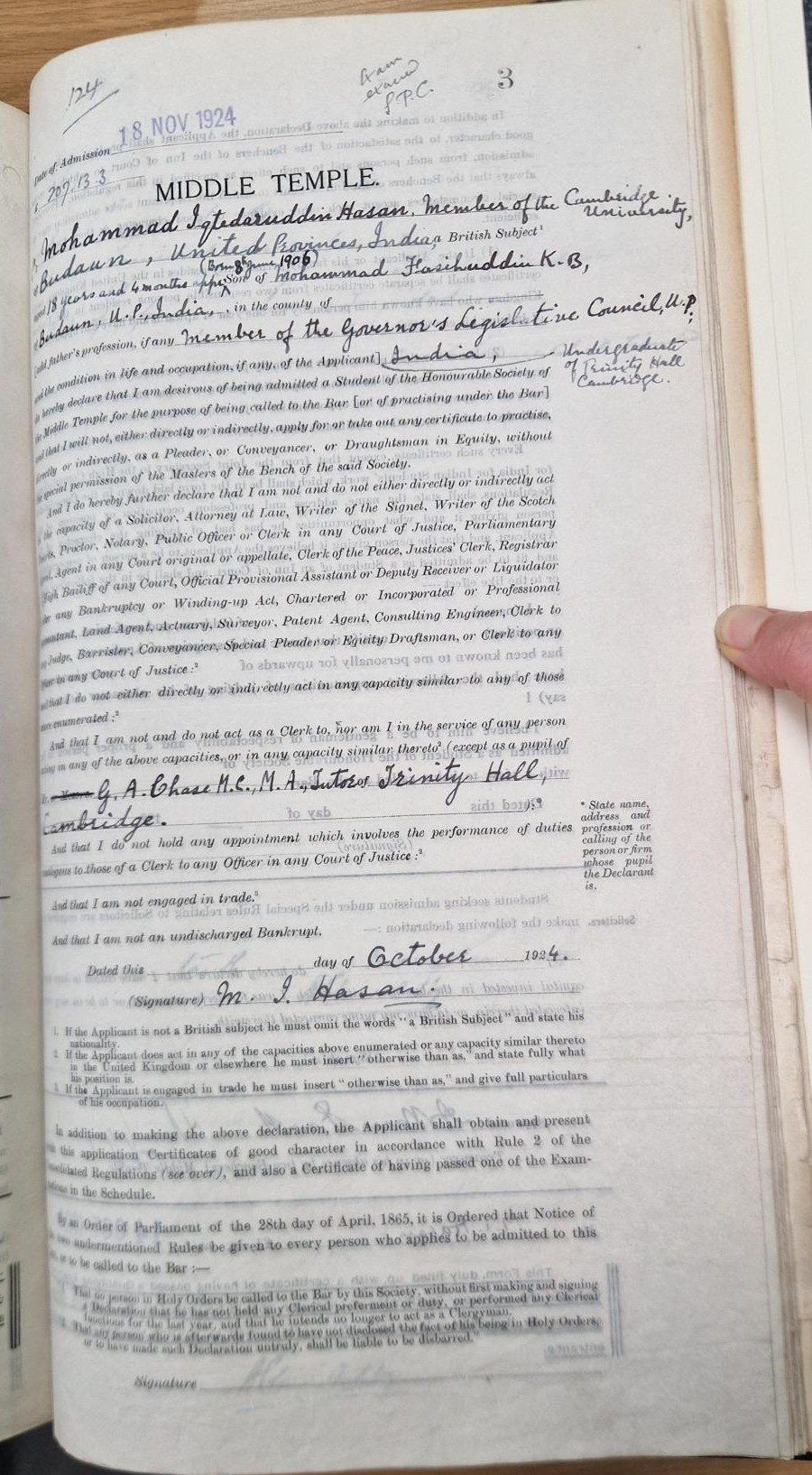
Perhaps the most towering name in this saga is that of Mohammad Iqtidaruddin Hasan (MI Hasan), who was admitted to the Middle Temple on Friday, 18 November 1927, while being a student at Trinity Hall, University of Cambridge. Born on Friday, 8 June 1906, MI Hasan was an heir of the Farshori family of Siddiqui Sheikhs who were amongst the prominent families of Budaun. His father Khan Bahadur Maulvi Fasih Uddin was a PCS officer in United Provinces and was appointed as the first Indian Collector of Nainital, and had also served on the Islington Commission for public services in India. Post retirement, Maulvi Fasih Uddin was elected as a member of the Governor of United Provinces’s Legislative Council and served several terms, before being elected to the newly formed United Provinces Legislative Assembly in 1937, a position he held until his death in 1938. Fasih Uddin Road, colloquially known as Chakkar ki Sadak, a prominent municipal road in Budaun, is named after him. After being Called to the Bar on Monday, 19 November 1928, Hasan returned to India, and started practising in Nainital (a hill station in United Provinces which was a popular British summer retreat and also served as the provincial summer capital) for many years before coming back to Budaun. In 1937, he also obtained a masters (by proxy) from Trinity Hall, Cambridge. Upon his father’s death in 1938, Hasan was elected to the UP Legislative Assembly and served for a year until 1939, when the assembly was dissolved due to the onset of the Second World War. Upon Indian independence in 1947, Hasan was appointed as the District Government Counsel (Indian equivalent of a District Attorney) and served in that position for 17 years, until 1964. Like most elites of the day, Hasan was an Anglophile and lived an English way of life, wearing Savile Row suits and silk dressing gowns. He was also a great-granduncle of the author, being his great-grandmother’s cousin.
Manzoor Hussain Siddiqui, a graduate of Aligarh Muslim University, was admitted to Lincoln’s Inn on Monday, 7 November 1927, at the age of 21. He also belonged to the Hameedi clan of Siddiqui Sheikhs, and his father M Ibrahim Hasan was a PCS officer who had served as Collector of District Pilibhit. After returning to India, Manzoor Hussain Siddiqui was appointed a lecturer of law at Aligarh Muslim University. He migrated to Pakistan after India’s partition in 1947.
Another grand old man whose name remains in vivid public memory, is Raja Purshottam Lal Badhwar of Ujhani, a major town in District Budaun. Born in 1912, he attended school at Sherwood College, Nainital, where he was a classmate of Field Marshal Sam Manekshaw. He was admitted to the Inner Temple on Tuesday, 16 February 1932. His father Rai Bahadur Brij Lal Badhwar MBE was an influential cotton magnate who was the proprietor of Prem Spinning Mills and served as the President of District Board, Budaun, and constructed the Tuberculosis Ward in Marris Government District Hospital and Badhwar Pavilion in District Board premises. Badhwar’s father-in-law was Maharaja Sir Kishen Pershad GCIE, a highly powerful Hyderabadi noble who twice served as Prime Minister of Hyderabad State during the reign of His Highness Asaf Jah VI Mir Sir Mahboob Ali Khan GCB GCSI, sixth Nizam of Hyderabad, and subsequently under His Exalted Highness Asaf Jah VII Mir Sir Osman Ali Khan GCSI GCB, seventh Nizam of Hyderabad. Badhwar was Called to the Bar on Tuesday 26 January 1937 and returned to India, where he was appointed as district judge by the Nizam of Hyderabad, a position in which he served briefly before returning to Ujhani. He also served as an honorary magistrate. Badhwar and his elder brother Rai Bahadur Amrit Lal Badhwar, respectively, had served as Chairman of Ujhani Municipal Board. In 1962, Badhwar was elected as a member of UP Legislative Assembly (MLA) from Ujhani constituency and was re-elected in 1974 from Budaun constituency as a candidate of the Indian National Congress. He passed away circa 1998. His eldest son NL Badhwar (Nippy) was a brigadier in the Indian Army, and daughter Pramila Badhwar was elected as an MLA in 1985 from Budaun constituency and served as deputy minister in UP Government, while his younger son Inderjeet Badhwar is an eminent Indian journalist.
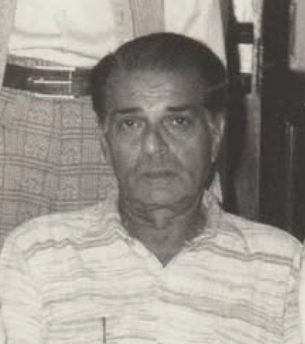
Sabih Uddin Ahmed was another scion of the Farshori family who practised as a barrister in Budaun. While exact details of his admission and Call date could not be found, his name appears in several editions of Thacker’s Indian Directory (which was an authoritative Indian biographical dictionary and was published until 1960). His father was Khan Bahadur Maulvi Razi Uddin, a vakil (kind of a lawyer in British India) as well as an honorary first class magistrate. His brothers were Maulvi Riaz Uddin (who was a vakil), Khan Bahadur Maulvi Fasih Uddin and Deputy Fayyaz Uddin (both of whom were PCS officers). Sabih Uddin passed away on Wednesday, 19 February 1969.
Yet another stalwart in this list is Sibghatullah Qadri QC, who was born in Budaun in 1937. His father Firasatullah Qadri was a teacher. In 1949, the family migrated to Karachi, Pakistan in the aftermath of India’s partition, and eventually settled in London in 1960. He was admitted to the Inner Temple in 1961, and was Called to the Bar in 1969. He also worked for BBC Urdu, Inland Revenue and Post Office Limited. With time, he became a leading voice against racial discrimination and was amongst the founders of Afro-Asian and Caribbean Lawyers Association (today known as the Society of Black Lawyers), an organisation which he later chaired. In 1989, he took silk and thus became Britain’s first Muslim Queen’s Counsel. Qadri passed away in 2021.
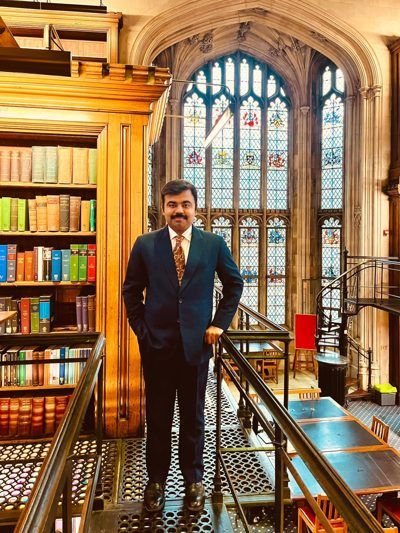
The latest addition to this list is that of the author himself, who was admitted to the Lincoln’s Inn on Thursday, 30 April 2026. Born into the Hameedi clan of Siddiqui Sheikhs tracing its descent from Hazrat Abu Bakr Siddiq (Prophet Muhammad’s companion and father-in-law and the first Caliph of Islam), the author’s family is amongst the old landed gentry of Budaun whose seven generations have rendered distinguished services in law and public life in the region. Twelve generations of his family served as judges (known as Qazi) in Budaun, from the early 13th Century to the early 19th Century. In the 1840s, his great-great-great-great grandfather Qazi Ali Taqi Uddin started practising law as a vakil in the courts set up by the British East India Company. His great-great-grandfather, Maulvi Kareem Alam, was also a vakil and a nominated member of the District Board of Shahjahanpur in 1897. The author’s great-grandfather Maulvi Ikram Alam was a leading advocate of the region from the early 1900s until his death in 1942 and was also an educationist who patronised the education of many underprivileged children. He served as the chief legal advisor to His Highness Nawab Sir Syed Hamid Ali Khan and His Highness Nawab Sir Syed Raza Ali Khan, the last two ruling Nawabs of Rampur, and was also a member of Budaun District Board and the President of the District Civil Bar Association. He (along with two other lawyers) constructed the Bar building in Budaun, consisting of a meeting hall, library and chambers, which is still used by lawyers today. His grandfather Maulvi Fakhre Alam was a distinguished statesman and lawyer who served as a Member of the UP Legislative Assembly in the 1980s, and as District Government Counsel from 1957-67 and 1969. He was also the President of the District Civil Bar Association, Budaun. His father Anwer Alam is a senior lawyer of the District who also served as the District Government Counsel from 1995 to 2011, and as the District Chairman of the Indian Institute of Public Administration. The author obtained an undergraduate law degree from Aligarh Muslim University in 2022, and thereafter worked as Research Associate to Justice Krishna Murari, former Supreme Court Judge. He is an advocate practising in the Supreme Court of India wherein he also became the youngest standing counsel and amicus curiae. He is currently pursuing the Bar course at City St. George’s, University of London, and is due to be Called to the Bar in 2027.
Besides the aforementioned names, there were several other non-native barristers who settled in Budaun and practised there. While not much information is available about these persons, old volumes of Thacker’s Indian Directory record the names of Amir Chand Bahree (a graduate of University of Edinburgh and hailing from Jalandhar, Punjab), Bhajanlal Miglani, Tanon, Mohd. Munir and Syed Mohd. Ikram, as barristers practising in Budaun.
After British India’s partition and independence in 1947, there was a sea change in the socio-political fabric of the country due to mass exodus of people as well as due to the egalitarian and socialist policies of independent India. This, along with the post-World War Two socio-economic scenario, were amongst the key factors which resulted in the rapid decline of the old culture of affluent families sending their children to undergo barrister training in England. But the old British Indian barristers maintained a significant presence in the judiciary, Bar and bureaucracy, often occupying high constitutional offices, well until the 1980s. However, ever since the significant reforms in India’s economy in the 1990s, there has been a reemergence of Indian barristers. Many young students now travel to England to pursue their postgraduate legal studies as well as to undergo barrister training. This trend can be seen particularly in the Supreme Court, and, for that matter, Calcutta High Court (the oldest High Court in India) which still has some remnants of the old barrister culture. Today, there would be a little more than a hundred practising barristers in India while there is not a single one in UP. In 1981, Budaun bid farewell to MI Hasan, its last practising barrister; and, with the passing of Raja Purshottam Lal Badhwar of Ujhani in 1998, Budaun District’s last string to the Inns of Court was severed. However, the author’s admission to Lincoln’s Inn in April, 2026 has, in a way, restored these historical ties. With the passage of time, many of these stalwarts have largely been forgotten and (except in a few cases) curtain has been drawn on their legacy; however, the names of these doyens have been etched in the history of Budaun as well as that of the Inns of Court. This Urdu couplet by the legendary poet Ameer Minai would perhaps be a befitting tribute to these legendary men:
Hue naamwar benisha’n kaise kaise
How many renowned (persons) have vanished without a trace
Zamee’n kha gayi aasma’n kaise kaise
Ah, what radiant heavens the earth has devoured, one by one
Aman Alam
Aman Alam is an advocate at the Supreme Court of India and has been a former research associate to a Supreme Court Judge. He is currently pursuing the Bar Course at City St. George’s, University of London, and is a member of Lincoln’s Inn, as well as a Fellow of the Royal Asiatic Society of Great Britain and Ireland.