

Disability Pride Month once again offers an opportunity to celebrate achievements and reflect within the profession, including candidly confronting where progress has stalled or regressed. The Bar faced a significant regulatory shift only a year ago. The Bar Standards Board’s (BSB) proposed Equality, Diversity and Inclusion (EDI) reforms signalled a move away from passive compliance towards an active, outcomes-focused duty to advance inclusion.
The proposed general equality rules outlined four main outcomes: eliminating unlawful discrimination, promoting equal opportunities, preventing bullying, harassment and victimisation, providing equal access to services, and fostering an inclusive environment. Additionally, the specific requirements for self-employed barristers and entities included developing policies, collecting and analysing equality data, creating action plans, providing training, ensuring disability access, and facilitating access to premises. For chambers, the specific requirements specify six core policies to manage practice and handle grievances, covering EDI, anti-harassment and bullying, reasonable adjustments, flexible working, parental leave, and the distribution of unassigned work. Perhaps the most controversial aspect of the reforms was the requirement to make chambers accessible.
The reforms were abandoned in May 2025 following concerns raised during consultation about regulatory overreach, proportionality, and compatibility with existing legal frameworks. Characterising the withdrawal or dilution of the reforms as a failure would be a mistake. Equally, dismissing the concerns raised by consultees would be misguided, given that many were principled and grounded in legitimate anxieties about the scope of regulation. The reality, as ever, lies somewhere between these positions. What is clear, however, is that the underlying issues which prompted the reforms have not disappeared. If anything, the need for meaningful change remains as pressing as ever.
Evidence demonstrates that disabled barristers face disproportionate challenges in recruitment, retention, and progression. Experiences of ill-treatment, whether through overt discrimination or more insidious forms of exclusion, remain prevalent. Requests for reasonable adjustments are too often met with resistance, delay, or a lack of understanding. Many still feel compelled to remain silent, wary of the professional consequences of speaking out. The barriers faced by disabled barristers are often not individual challenges solved by medical intervention, as the medical model of disability would suggest. They are systemic issues that require collective solutions. The social model of disability characterises this. In practice, this looks like physical inaccessibility, whether in chambers or court buildings, which continues to restrict participation. Additionally, cultural attitudes, often shaped by outdated assumptions about disability and neurodiversity in particular, can create environments in which individuals feel unwelcome or undervalued, or are pressured to act ‘normally’. Furthermore, procedural practices, such as work allocation and performance expectations, may inadvertently disadvantage disabled people.
EDI is not an optional add-on to professional practice; it is integral to the administration of justice. A profession that excludes or marginalises talented individuals based on disability undermines its own claim to excellence. It limits the diversity of perspectives that inform legal argument and judicial decision-making. It risks eroding public confidence in the fairness and accessibility of the legal system. These are not problems that can be resolved through compliance alone. They require sustained, deliberate effort and leadership.
The Fundamental Conflicts in EDI Regulation
The BSB’s decision to reconsider its proposals reflects, in part, the tension inherent in regulating EDI. On the one hand, there is a clear imperative to act. On the other hand, there are legitimate concerns about the limits of regulatory authority, the risk of unintended consequences, and the need to preserve fundamental principles such as freedom of expression and proportionality.
These concerns were articulated forcefully during the consultation process. Questions were raised about whether the proposed duties extended beyond the BSB’s statutory remit under the Legal Services Act 2007. There were apprehensions about regulatory overreach and the risk that well-intentioned measures might create uncertainty or even deter legitimate professional discourse.
By stepping back from the reforms, the BSB has acknowledged these concerns. That, in itself, is a positive development. Effective regulation must command confidence, and that confidence depends on clarity, legitimacy, and proportionality.
However, regulatory caution must not become regulatory inertia. The absence of new rules does not equate to the absence of problems. Conversely, greater responsibility is placed on the profession to ensure that progress does not stall.
From Compliance to Commitment Revisited
The central argument I advanced in The Barrister, written before the reforms were dropped but published in June 2025, that the Bar must move from compliance to commitment, remains unchanged. Compliance is, by its nature, reactive. It asks, ‘What must we do to meet our legal obligations?’ Commitment, by contrast, is proactive and asks, ‘What should we do to create a profession that reflects the values we espouse?’
For disabled barristers, this distinction is not abstract but reflects our realities of practice. For example, it is the difference between having to justify a request for reasonable adjustments after reluctance and having those adjustments anticipated and provided as a matter of course.
A Changed Regulatory Landscape
The rejection of the BSB’s approach does not necessarily mean that EDI has been deprioritised; rather, it signals how progress is to be achieved. There is likely to be greater emphasis on guidance, support, and collaboration rather than on prescriptive rules. This presents both challenges and opportunities.
The challenge is to ensure that momentum is not lost. There is a risk that EDI becomes fragmented, dependent on the goodwill and initiative of individual chambers and practitioners. Progress may be uneven.
The opportunity, however, lies in developing more nuanced, context-sensitive approaches. The diversity of practice at the Bar means that a one-size-fits-all model is unlikely to be effective. Greater flexibility enables solutions tailored to the specific circumstances of different chambers and practitioners. It also encourages innovation and the sharing of best practices. For this opportunity to be realised, there must be sustained commitment from all parts of the profession. Regulators, representative bodies, chambers, and individual barristers all have a role to play.
The Middle Temple Disability Forum
The journey from compliance to commitment is rarely linear, marked by progress, setbacks, ambition and recalibration. The recent developments regarding the BSB’s EDI reforms are part of that process. The underlying objective remains unchanged. A profession that truly embodies equality, diversity and inclusion is not only fairer; it is stronger. It is better equipped to serve the public, uphold the rule of law, and deliver justice. The responsibility for achieving that objective does not rest solely with the regulator. It rests with all of us.
The Middle Temple Disability Forum supports that endeavour. The question is whether we, as a profession, are prepared to meet the moment with the commitment it requires. As a practitioner-led initiative, the forum is uniquely positioned to bridge the gap between regulatory aspiration and practical reality.
The forum provides a platform for disabled barristers and students to share their experiences, support one another, and advocate for change. It facilitates dialogue between practitioners and Domus, ensuring that the voices of those directly affected are heard in the development of policies and practices.
Our role in a landscape where regulatory direction may be less prescriptive is invaluable. The forum enables chambers and practitioners to take proactive steps, even in the absence of formal requirements. It fosters a culture of shared responsibility, in which EDI is seen not as an external obligation but as an integral part of professional practice.
The forum relies on the engagement and input of everyone in the Inn. Your voice counts, whether you are a student, pupil, practising member, Bencher, or a member of staff. Members and staff are encouraged to attend upcoming events, volunteer to support the forum, share their experiences, or get in touch to learn more. There is no requirement to identify as disabled to participate. To get involved, contact the forum via email at disability@middletemple.org.uk.
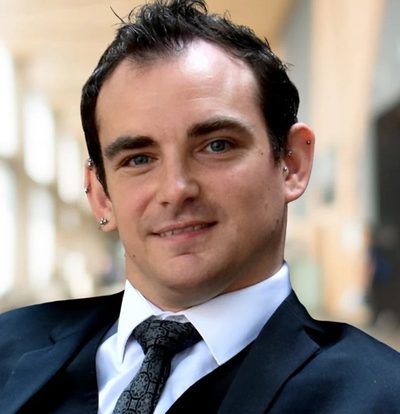
Daniel Holt is a barrister, Chair of the Association of Disabled Lawyers and Chair of Middle Temple’s Disability Forum.