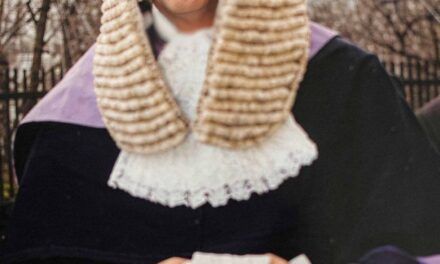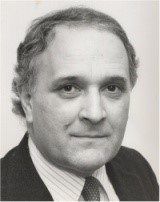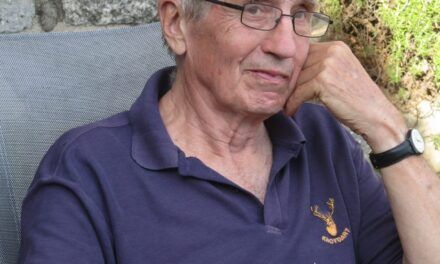
Fortunately for the government lawyer James Nursaw the furore surrounding the Spycatcher affair, the late 1980s debacle surrounding the publication of Peter Wright’s book subtitled The Candid Autobiography of a Senior Intelligence Officer, was in its dying days when he took over as Procurator General and Treasury Solicitor.
Wright was a retired MI5 officer, and his book had triggered alarm within the British government. Nursaw’s predecessor, Sir John Bailey, had refused permission for publication by citing the Official Secrets Act while the prime minister, Margaret Thatcher, had initiated legal proceedings against Wright.
Yet within a few weeks of Nursaw taking over as treasury solicitor, Spycatcher was cleared for legal sale in Britain. It had, after all, been published abroad. With revised Official Secrets legislation, it would be unlikely that Nursaw would ever have to vet and redact sections of such texts in future.
‘Some people view civil service lawyers as second-rate people doing a dull, routine job,’ Nursaw wryly told The Times in 1988. Although he did not share the view, he was concerned that the department was doing little to attract the best lawyers, who were being tempted by the pay offered by City law firms. Within months of his taking office there was a boost in pay as structures were streamlined and, for the first time, the entire 2,500-lawyer service was put under the control of its own minister, Sir Patrick Mayhew QC, the Attorney General.
Nursaw’s tenure from 1988 to 1992 as head of what is effectively the largest solicitors’ firm in the country would cover a wide remit, from conveyancing on government property, advising the Treasury on points of law, managing the lawyers in the Whitehall departments to briefing barristers in the government’s civil cases. Describing himself as an ‘all-rounder’, he told the Solicitors Journal in 1992: ‘I’ve never really done any litigation and I don’t pretend to be a conveyancer. But I have to be able to understand what’s going on.’
On Nursaw’s part there were increasing efforts to challenge Bar Council rules preventing lawyers in the Crown Prosecution Service and other government departments from having the right to plead cases in the Crown Court. In a joint submission with the director of public prosecutions, Sir Allan Green QC, to the Lord Chancellor, Lord Mackay of Clashfern, Nursaw said he felt it was in breach of the Courts and Legal Services Act 1990, which expanded the rights of audience to lawyers beyond just barristers. A wider choice of advocate, they argued, could enhance the quality of service to courts.
James Nursaw was born in 1932 in Clapton, east London, to William Nursaw, a company secretary, and Lilian (née Howell), a seamstress. He had two younger sisters, Ann and Gillian. At Bancroft’s School in Woodford Green, Essex, he won the top maths prizes, excelled on the hockey pitch and was a contemporary of the actor Denis Quilley.
A scholarship to Christ’s College, Cambridge, followed and for a year he read mathematics before switching to law. He did his National Service as a flying officer in Norfolk at RAF Wickenby and in 1955 was Called to the Bar at Middle Temple. Serendipitously, it was the same day as Eira Caryl-Thomas.
They did not meet again, however, until the famous 1957 trial of the Marchioness of Winchester versus the mother of Ian Fleming, whom she accused of luring her husband away. Nursaw spotted a young reporter in court trying to take notes standing up and offered her his chair. They married in 1959 and Eira would go on to become a law reporter for The Times. Eira died in 2018 and Nursaw is survived by their daughters: Margaret, a retired paediatric physiotherapist, and Catherine, a retired trademark attorney.
Nursaw first arrived in Whitehall in 1959. He came from a post as a senior research officer at the department of criminal science in Cambridge and had been tempted to practise as a barrister. Newly married, he decided he wanted a more reliable source of income. ‘I spent a lot of time getting information out of the Home Office,’ he said, ‘and when they were short of a lawyer, they said “join us”. I enjoyed it so much I hung around.’
The work suited him and over the next three decades he would make his way through government departments to the Law Officers’ department before returning as legal adviser to the Home Office and Northern Ireland Office. In 1983 he was appointed a Companion of the Order of the Bath and in 1988 took silk. After stepping down as treasury solicitor he was promoted to knight commander, took a post as a legal adviser to the Broadcasting Complaints Commission and for ten years was counsel to the chairman of committees in the Lords.
Family was important to Nursaw, and holidays were spent taking canal boat trips around Britain and, in retirement, sailing in the Seychelles. He was a member of MCC, played squash until his seventh decade and learnt to ski in his fifties. A bright-eyed, affable and kind figure, he once offered an impromptu speech at a wedding on the part of the bride when he noticed her parents had not made it.
Nursaw’s career in the civil service remained an immense source of satisfaction to him and he never, he told The Times, wanted to do any other kind of legal work. The barrister is bought by one side; the solicitor answers to his client. Only in the civil service, he said, do lawyers play a more objective role.
Obituary reproduced with kind permission from The Times.