January 2026 marks 20 years since I first started to work as a librarian at Middle Temple. My first role was as Rare Books Librarian, progressing to Senior Librarian, Deputy Librarian, and finally Head of the Library. It has been an exceedingly fruitful and wonderful experience working at the Inn during these two decades.
One of the most enjoyable and satisfying aspects of working at Middle Temple Library is the opportunity to interact with an astounding collection of early printed books. The library holds over 9,000 books printed prior to 1800, and approximately 300 manuscripts. Working with the collection provided me with the opportunity to complete a PhD in 2024 on the founding bequest, made by Robert Ashley in 1641. In February of this year, the book version was published by Brill: The Great Book of the World: the formation and use of the library of Robert Ashley (1565-1641).
There are too many interesting books from the collection to list, but it is worth highlighting some of my favourite items from the collection.
I am often asked what my favourite book in the collection is, and without a doubt it is our copy of Les voyages du Sieur de Champlain Xaintongeois, published in Paris in 1613. Having lived in Montreal for 15 years before moving to England, it perhaps an obvious choice to make amongst 9,000 books. It is a beautifully illustrated work, including many engravings and maps of the areas of Québec, Cape Cod, Newfoundland and Acadia. It covers the first account of Samuel de Champlain’s (1567-1635) four voyages to what is now the Eastern coast of Canada and the United States.
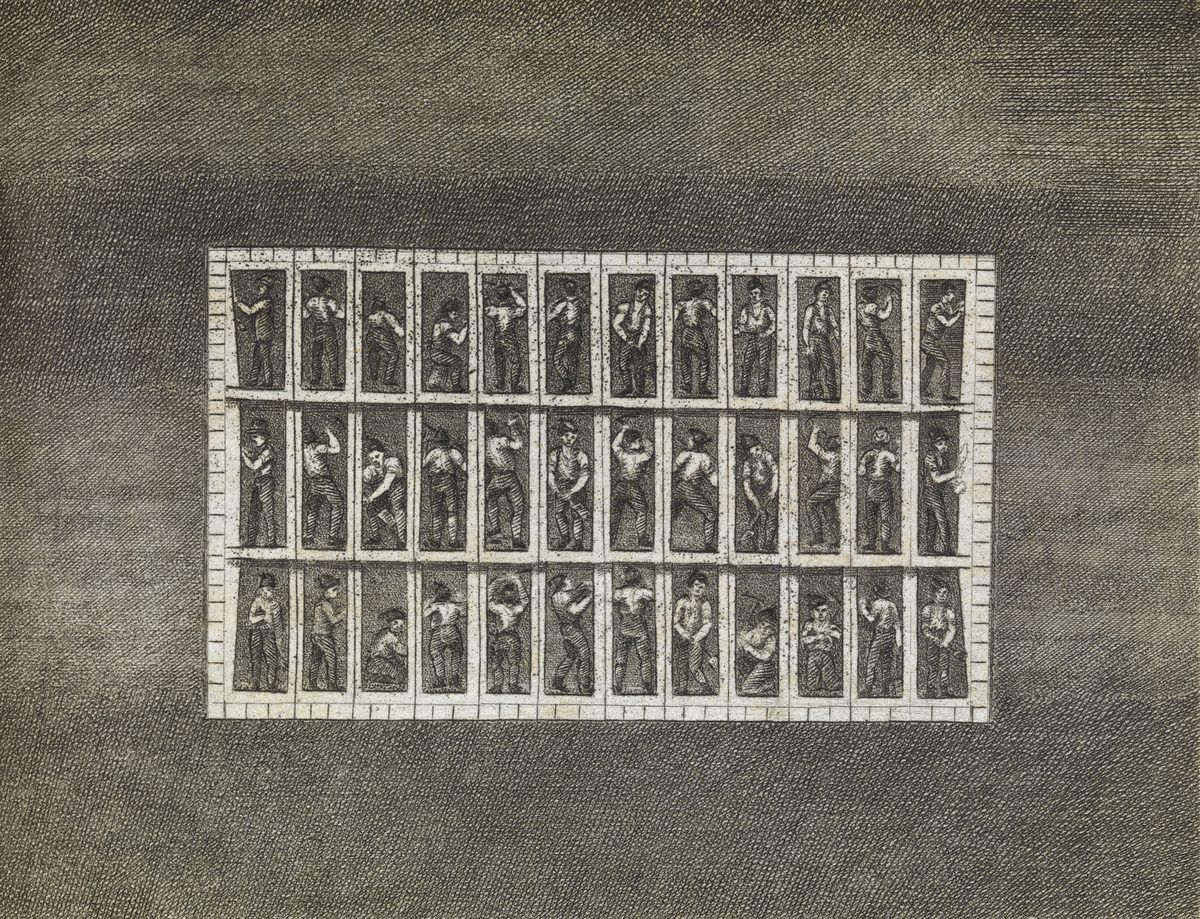
Sketches of the works for the tunnel under the Thames, from Rotherhithe to Wapping is another gem of the collection, albeit slightly later than 1800, having been published in 1828. It was donated to the library by Guildhall Library in 1949, presumably having been a duplicate in their collection. It is part of the Library’s London Collection and has 15 plates illustrating the tunnel that was built by Sir Marc Isambard Brunel. It is an oblong book, which is an unusual format. The Thames Tunnel (or Brunel Tunnel) was opened in 1843 and trains from the London Overground now run through it, although it was originally designed for carriages and pedestrians. Three of the illustrations have been digitised as part of our partnership with the Science Photo Library.
Leonhard Thurneisser zum Thurn’s [Bebaiosis agonismou]. Das ist Confirmatio concertationis was a book that he self-published in 1576 and is notable for its wonderful anatomical plates. It is a ‘flap book’, whereby layers of paper are used to create a type of 3D anatomical illustration of the human body, uncovering different layers of the body as each flap is lifted. The illustrations are incredibly fragile, and we do not often have the chance to display the book for that reason. Our communications team filmed a short video of the book for our social media pages earlier this year.
Back to the 19th Century for my fourth choice, which is an extra-large folio edition of Richard Banner Oakeley’s The Pagoda of Hallibeed, published in London in 1859. This wonderous book has 56 photographic albumen prints depicting the temples of Halebid, in India. Only 25 copies of this book were produced, and this copy was donated to the Inn by the author/photographer himself. Oakeley used wax paper negatives, as they were easier to use in the Indian heat. When we consider how difficult it would have been to travel in India in the mid-19th Century, carrying heavy photographic equipment, this book is a truly outstanding achievement, and we are lucky to have a copy in our collection.
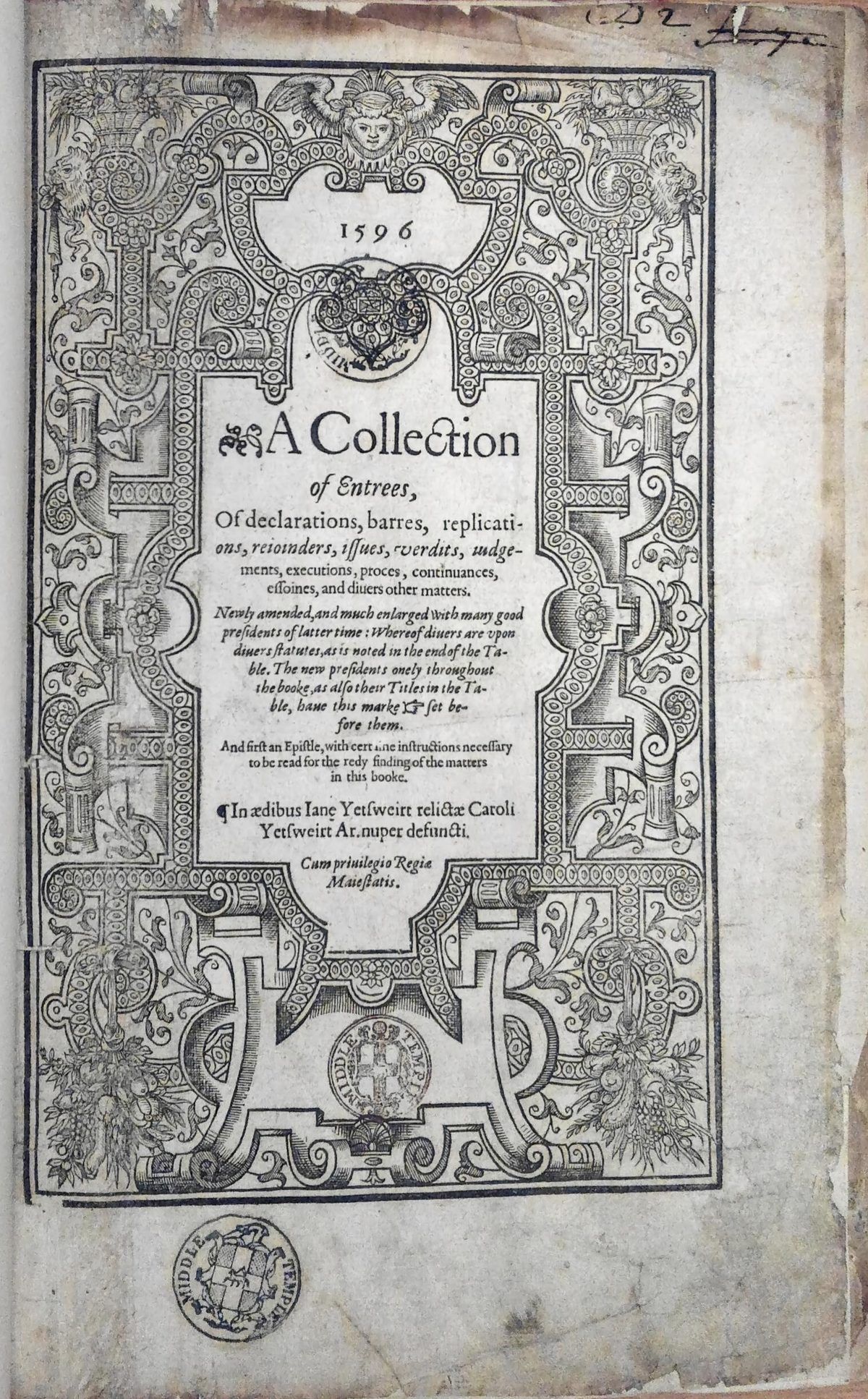
The final book I have chosen as a highlight from the collection is a fairly humble law book, William Rastell’s 1596 A collection of entrees, of declarations, barres, replications, reioinders, issues, verdits, iudgements, executions, proces, continuances, essoines, and diuers other matters, otherwise known as Rastell’s Entries. I have chosen this work because it was printed by a woman, Jane Yetsweirt. Her printing and selling business (aedibus, or house) was located on Fleet Street, within Temple Bar. We have no details about Jane, apart from the fact that she ran the business with her husband Charles and took it over from him completely upon his death circa 1595. This is a particularly interesting law book for me because Rastell (1508-1565) started life as a printer, before becoming a lawyer (and Treasurer of Lincoln’s Inn, but we won’t judge him for that). This collection of entries was ‘the best source of precedents of pleading and court-forms’ and was compiled in Leuven, where Rastell fled in 1563 for religious reasons.
It is perhaps unfair to have favourite books in the collection. But it is inevitable when working with such a large and varied number of books that certain items will stick out as gems. I encourage members of the Inn to find a favourite of their own from the collection.

Renae Satterley is Head of the Library at Middle Temple and celebrated her 20th year at the Inn earlier this year. She completed her PhD at Queen Mary, University of London in 2024. Her thesis focused on Robert Ashley’s founding bequest to the library, which makes up the majority of the early printed book collection at the Inn.