The Mongol Empire is often recounted for the ease with which its leaders, beginning with its founder, Genghis Khan, carried out brutal acts of war and violent transgressions against those who opposed their will. However, the Mongol Empire, as most modern historians agree, was in truth a well-ordered and institutionally robust polity – so much so, that at the height of their rule, they ushered in a global peace, known as the Pax Mongolica.
The Mongol laws, known as Yassa, helped bridle an otherwise untenably large empire, brought to heel chaos threatening to spill immense quantities of blood at any given time.
The enduring success of the Yassa lay not in draconian enforcement nor in any erudite jurisprudence – the laws of the Yassa were usually practical to the point of banality – but rather in its concerted and thoughtful formulation. The Yassa was conceived by the Mongol Empire, specifically for the Mongol Empire, connecting its roots to the very core of Mongol identity in the age of empire. This meant forfeiting certain tribal customs that no longer fit in with the needs of an imperial nation, while simultaneously honouring and entrenching other, more indispensable, customs intrinsic to the Mongol cultural identity.
The Yassa incorporated both Mongol culture and the cultures of the different nations within the empire, in order to unify the disparate peoples of the empire under one banner.
There was a deeply normative basis to the Yassa, as it recognised that a law aiming to govern and, ultimately, shape a society should be based on that society’s peoples’ norms.
At first glance, one would not think to positively compare the Mongol Empire’s social and legal policies, in any capacity, to the modern-day United Kingdom. However, in its haste to do away with jury trials, it appears that the UK government has presently forgotten to honour its own societal norms – which even the rapacious Genghis Khan heeded dutifully.
Stemming from the Justice Secretary’s announcement of intended changes to jury trials following Sir Brian Leveson’s independent review, the debate surrounding further restrictions has been highly charged and vigorous.
Ostensibly, the crux of the argument in favour of further restricting jury trials is the possible effect of reducing the Crown Court backlog. As of December 2025, the backlog is nearly 80,000 cases. However, the Leveson Independent Review notes ‘only 1% of all criminal cases were dealt with by jury trial in the Crown Court, with the magistrates’ court dealing with more than 90% of all cases received in the criminal courts’ in 2024. The report goes on to say that while ‘the jury trial is, for many contributors, considered the ‘gold standard’ of the trial processes in the criminal justice system’, it disagrees with this ‘characterisation […] given they are only used in 1% of criminal cases.’
As noted in an article from the Justice Gap, ‘his recommendations include the creation of a Crown Court Bench Division, where ‘either-way’ offences […] would be heard by a judge and two magistrates […] restricting jury trials for offences with a maximum two-year sentence […] directing judge-alone trials for serious and complex fraud.’ The report also ‘concluded that there are certain circumstances where a trial by judge alone is appropriate, […] the case in common law countries such as Australia, Canada and New Zealand.’
However, these statistics ignore the greater point that jury trials are an endemic and highly central piece of the normative foundation of English law. The Criminal Bar Association (CBA) has said as much in their formal reply to the Leveson Independent Review, noting, ‘trial by jury is fundamental to the British way of life. It is the way allegations of serious criminal offending have been dealt with for centuries.’ In a separate statement, the CBA elucidated on the issue further:
The right to trial by jury dates back to Saxon Britain, before the Norman invasion of 1066. It is enshrined in Magna Carta. It has been a fundamental feature of the British Constitution, and the British Justice System, for over 800 years […] It is woven into the fabric of British society and is something of which the public has rightly been proud.
While the Crown Court backlog is a real, actionable issue, the practical necessities of law reform should not preclude lawmakers from connecting its roots to the very core of British identity in the modern age. Furthermore, despite spearheading the current proposed reforms, in the 2017 Lammy Review, the Deputy Prime Minister noted that, ‘successive studies have shown that juries deliver equitable results, regardless of the ethnic make-up of the jury, or of the defendant in question.’ It is here that the example of the Yassa is most applicable as well, since much like the Mongol Empire, the United Kingdom is immensely ethnically diverse. Therefore, a law derived on a normative basis as important as jury trials, should not be put to the wayside so easily, or at all for that matter.
In the Deputy Prime Minister’s announcement for ‘swift and fair justice’, the subtitle reads ‘Bold modernisation of the criminal courts to put victims first and restore public confidence in the system’. However, how can public confidence be restored in a system which, as the CBA points out, is actively pushing a system where ‘the lack of diversity amongst the magistracy and judiciary would lead to the concentration, fostering and reinforcement of prejudices of all kinds’?
An example of how to truly restore confidence in a legal system can be seen during the Mongol invasion of the Middle East. Even when the Tengri-worshipping Shamanistic Mongols came into contact with Islam following their sack of Baghdad in 1258, they were careful to ensure that neither the norms which formed the basis of Yassa, nor the norms of the local Sharia law, were overlooked. As an academic paper on the subject points out:
Overall, a process of acculturation took place which led to increased intermingling of different layers of the society […] Despite their conversion, however, the Mongols still used older models of government and judicial administration like the yāsā regulations, while also combining these with Islamic law and Muslim concepts of sovereignty. When the two norms came into conflict, it seems that they dealt with it practically.
In stark contrast, the proposed reforms to jury trials are neither practical nor dealing with a fundamental norm in British society. The UK government would do well not to contradict their own cultural and historical norms, traditional giants on the shoulders of which the modern state and its law currently stand.
Odd as it might sound, the British jurists and legislators would do well to take a page out of Genghis Khan’s book and ensure they do not propose legal reforms without first appreciating fundamental societal norms.
If the Mongols could practically deal with issues as large as two underlying societal norms, without compromising on these norms being the basis of their legal code, what excuse does the UK government have for being unable to deal with the practical issues surrounding the Crown Court backlog without compromising a British societal norm as fundamental as the jury trial?
The answer, it would appear, would be none.
The information included in this article was correct at time of writing.
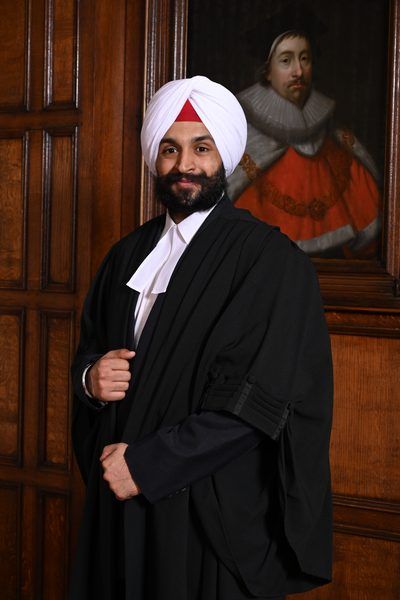
Darshbir Singh Chahal was Called to the Bar by Middle Temple. Currently, he is an active pro-am Muay Thai fighter. An American citizen, he has recently been approved by the New York State Board of Law Examiners to sit the February 2027 Bar examination.